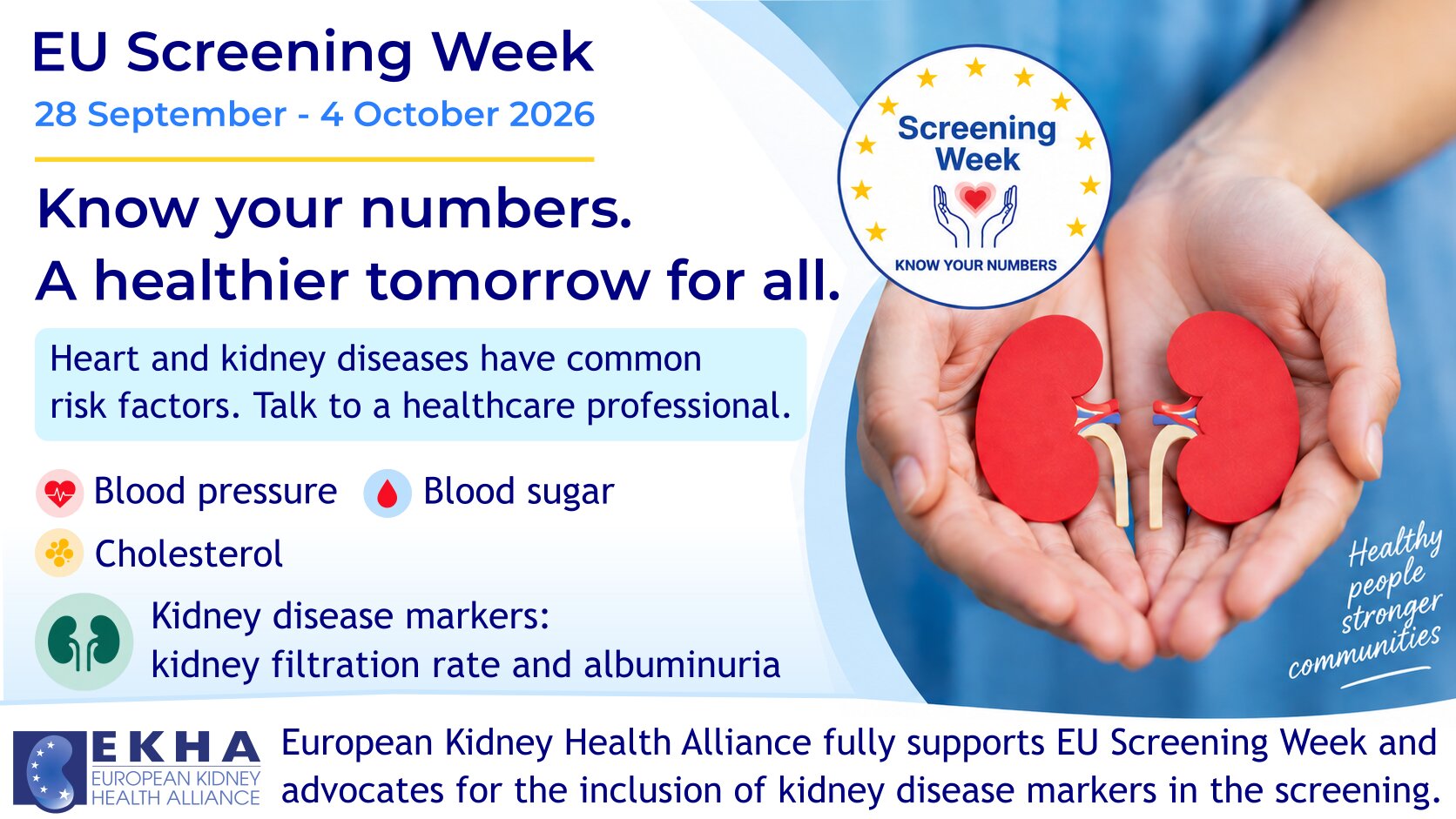
EU Screening Week: knowing your numbers is important for your kidney health too
From 28 September to 4 October 2026, organisations, health professionals, patient communities and public-health actors across Europe will come together for EU Screening Week, part of the wider Know Your Numbers campaign.
The initiative has a simple and important premise: prevention starts before symptoms.
Many people who feel perfectly healthy may be living with high blood pressure, high blood sugar or high cholesterol without knowing it. EU Screening Week therefore encourages Europeans to understand these numbers, discuss appropriate health checks with healthcare professionals and take informed action earlier.
For the kidney community, this European mobilisation represents an important opportunity.
But it also raises an important question: If Europe is encouraging citizens to know the numbers that reveal silent cardiovascular and metabolic risk, shouldn’t we also help them understand their kidney health?
The answer matters because cardiovascular disease, diabetes and chronic kidney disease (CKD) are not separate public-health challenges. They are deeply interconnected conditions with many of the same risk factors, frequently occur together and can accelerate one another.
That means Europe should increasingly move from disease-specific prevention towards cardio-renal-metabolic prevention.
EU Screening Week can help make that shift visible.
The strength of EU Screening Week: finding risk before disease becomes visible
EU Screening Week is not intended to be a centrally administered EU medical screening programme. Instead, the campaign provides a common framework through which professional networks, patient organisations, public-health actors and other partners can bring prevention closer to citizens.
That approach has considerable potential.
The Know Your Numbers campaign focuses on three easily understood risk indicators: blood pressure, cholesterol and blood sugar.
These numbers matter precisely because the conditions they reveal may develop without obvious symptoms. The campaign therefore asks citizens not to wait until they feel ill before thinking about prevention. Its communication guidelines explicitly describe the intended audience as broad, including people who feel healthy but may nevertheless have silent risk factors.
The same logic applies powerfully to kidney disease.
CKD can progress for years without noticeable symptoms, and kidney disease affects around 100 million Europeans, while awareness remains strikingly low.
This makes kidney disease precisely the kind of condition for which an early-detection culture matters.
The problem is therefore not with the principle behind Know Your Numbers. On the contrary, the principle is exactly right.
The opportunity is to take it one step further.
The numbers are already connected to kidney health
Blood pressure and blood sugar should not be viewed exclusively as indicators of cardiovascular health.
They are highly relevant to kidney health too.
Hypertension and diabetes are major risk factors associated with CKD, while kidney disease itself substantially increases cardiovascular risk. This relationship runs in both directions: damaged kidneys can contribute to cardiovascular complications, while cardiovascular and metabolic conditions can accelerate kidney damage.
This is why an integrated approach is increasingly described as cardio-renal-metabolic health.
EKHA’s contribution to the European Commission’s work towards a future Council Recommendation on cardiovascular health checks makes precisely this case. EKHA has called for Europe to move beyond a purely cardiovascular approach towards integrated cardio-renal-metabolic health checks.
That does not mean abandoning blood pressure, cholesterol and blood sugar.
It means recognising what those measurements are already telling us.
A person with hypertension or diabetes is not only someone whose cardiovascular risk deserves attention. They may also be someone for whom kidney health needs to be considered.
Consequently, EU Screening Week offers an ideal public-health moment to communicate a simple message:
Know your numbers — and understand what those numbers mean for your heart, kidneys and metabolic health together.
Two additional measures can reveal what cardiovascular numbers alone cannot
Shared risk factors are only part of the story.
Kidney health itself can be assessed using established tests. EKHA has advocated the inclusion of two measures alongside cardiovascular and metabolic assessments:
estimated glomerular filtration rate (eGFR), calculated using serum creatinine, which provides information about how well the kidneys are filtering the blood; and
urinary albumin-to-creatinine ratio (uACR), which can identify albumin in the urine and therefore signs of kidney damage.
EKHA’s submission on the future EU Council Recommendation on cardiovascular health checks specifically calls for serum creatinine/eGFR and uACR to be incorporated into integrated health checks. It argues that these relatively simple tests can identify kidney disease substantially earlier than waiting for advanced loss of kidney function.
This has important implications for the concept of Know Your Numbers.
For people at risk, particularly those living with diabetes, hypertension, cardiovascular disease or other relevant risk factors, knowing kidney-related measurements can complement the campaign’s existing cardiovascular and metabolic indicators.
The policy objective should therefore not simply be to add more numbers to a public-awareness campaign.
It should be to build a coherent pathway from risk identification to appropriate testing, clinical interpretation and follow-up.
A screening result is not a diagnosis — something the EU Screening Week communication guidelines themselves appropriately emphasise. Results should be interpreted and, where necessary, followed up by qualified healthcare professionals.
The same principle should guide kidney screening.
Early detection matters because earlier action is increasingly possible
Screening only creates value when identifying risk earlier can lead to meaningful action.
That is increasingly the case for CKD.
EKHA notes that advances in treatment mean that earlier diagnosis can create opportunities to slow CKD progression and reduce both kidney and cardiovascular complications.
The implications extend well beyond nephrology.
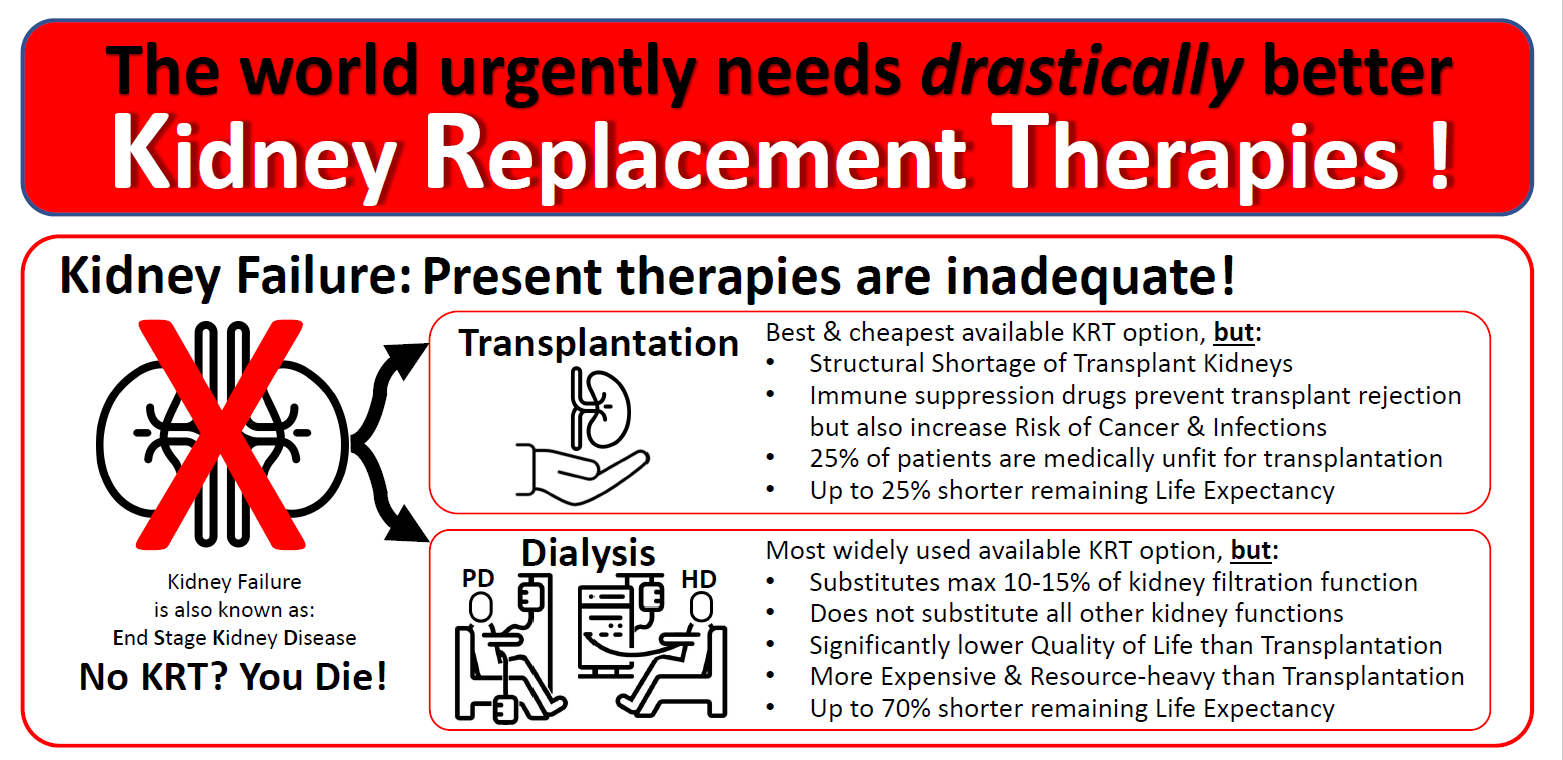
Preventing or delaying progression towards kidney failure can reduce the need for highly intensive kidney replacement therapies such as dialysis or transplantation. Earlier management may also reduce cardiovascular complications — an especially important consideration because cardiovascular disease and CKD frequently coexist.
This transforms kidney screening from a specialist concern into a broader question of health-system prevention.
Detecting kidney disease earlier means creating an opportunity to intervene before irreversible damage has accumulated.
And that is exactly the philosophy underpinning EU Screening Week.
European policy is beginning to recognise the heart-kidney connection
The case for integrated prevention is increasingly reflected in European policy discussions.
In June 2026, the European Parliament’s Committee on Public Health (SANT) backed its own-initiative report on an EU Cardiovascular Diseases Strategy. According to EKHA’s analysis of the committee text, CKD was incorporated across several dimensions of the strategy, including prevention, screening, multimorbidity, integrated care and research. The report recognised kidney disease as an important NCD and contributor to cardiovascular risk and highlighted the need to better integrate kidney health into cardiovascular risk assessment.
This is significant.
It reflects an emerging recognition that cardiovascular policy cannot achieve its full potential if kidney disease remains outside the prevention framework.
The same principle applies to screening.
The European Commission’s initiative towards a future Council Recommendation on cardiovascular health checks creates an opportunity to translate integrated cardio-renal-metabolic thinking into practical prevention. EKHA has advocated health checks incorporating lifestyle, blood pressure, lipid profiles, diabetes markers, kidney function and obesity-related risk factors rather than maintaining separate disease-specific approaches.
EU Screening Week can help translate this policy debate into something citizens immediately understand.
One person. One health check. Multiple opportunities for prevention.
From Safe Hearts to safe hearts and safe kidneys
The EU Screening Week materials situate the initiative within the wider prevention agenda of the Safe Hearts Plan, with the campaign intended to turn European prevention ambitions into practical, citizen-facing action.
Kidney health belongs within that ambition.
The reason is not merely that people with CKD frequently develop cardiovascular complications. It is that cardiovascular, kidney and metabolic diseases form an interconnected clinical and public-health challenge.
European policymakers are increasingly acknowledging that reality.
EKHA’s analysis of the European Parliament cardiovascular strategy describes explicit recognition of CKD among major interconnected NCDs, kidney disease as an important cardiovascular risk factor and the need for integrated, person-centred care pathways rather than fragmented disease silos.
The next step is implementation.
Health systems should make it easier for primary care professionals to identify people at risk across the cardio-renal-metabolic spectrum and ensure that abnormal results lead to appropriate follow-up.
That means thinking beyond individual disease campaigns towards integrated prevention pathways.
EU Screening Week can also help Europe deliver on global kidney-health commitments
The timing is particularly important because kidney health has gained unprecedented recognition at global level.
In 2025, the World Health Assembly adopted a landmark resolution on kidney health, creating a global mandate to strengthen prevention, diagnosis, treatment and access to kidney care. EKHA notes that subsequent international commitments have reinforced the opportunity to integrate kidney health more systematically into national health systems.
The challenge now is implementation.
A 2026 Health Policy article highlighted by EKHA identifies stronger primary care, earlier diagnosis and management, kidney-health integration into national plans, improved prevention linked to diabetes and other risk factors, better data systems and improved access to kidney replacement therapy among the priorities for translating these commitments into practice.
EU Screening Week offers Europe a practical mechanism for advancing part of that agenda.
A European prevention campaign cannot by itself solve the enormous challenge of CKD. Nor should every citizen necessarily receive every possible test; individual screening decisions should reflect clinical risk and national guidance.
But the Week can establish an important principle:
kidney health should be part of the conversation when Europe talks about early detection.
A policy opportunity: make cardio-renal-metabolic screening the norm rather than the exception
The first EU Screening Week is deliberately pragmatic. Its stated ambition is to stimulate activity across as many Member States as possible through screening, awareness, local outreach, media activity and digital promotion.
That makes this first edition a valuable starting point rather than an endpoint.
As the initiative develops, policymakers and participating organisations should consider how the Know Your Numbers concept can evolve towards a more integrated prevention model.
That could mean:
- Explicitly recognising kidney health within EU Screening Week communications. Blood pressure and blood sugar are relevant to both cardiovascular and kidney risk, and public communications should explain this connection.
- Promoting risk-based kidney health assessment. People at increased risk should be encouraged to discuss appropriate kidney checks with their healthcare professional, consistent with national guidance.
- Including eGFR and uACR in integrated cardio-renal-metabolic health-check pathways where clinically appropriate. These measurements can complement cardiovascular and metabolic risk assessment and help identify CKD earlier.
- Building clear referral and follow-up pathways. Screening should connect people with appropriate primary and specialist care rather than becoming a one-off measurement.
- Using EU Screening Week to reduce disease silos. Cardiovascular, diabetes, obesity and kidney organisations have an opportunity to communicate prevention together rather than competing for attention.
- Embedding kidney health in future EU prevention policy. The emerging Council Recommendation on cardiovascular health checks and implementation of the Safe Hearts agenda offer concrete opportunities to institutionalise integrated cardio-renal-metabolic prevention.
This approach would build upon — rather than replace — the existing campaign.
Know your numbers. Know what they mean for your kidneys too.
EU Screening Week sends an important message to Europeans: do not wait for symptoms before thinking about your health.
For kidney disease, that message could hardly be more relevant.
The campaign materials repeatedly stress that silent risk factors can exist even when someone feels healthy. CKD presents precisely this challenge.
Europe therefore has an opportunity to broaden the meaning of Know Your Numbers.
Know your blood pressure.
Know your blood sugar.
Know your cholesterol.
And, if you are at risk, ask whether you should know your kidney function (estimated glomerular filtration rate) and albuminuria too.
Because the heart, kidneys and metabolic system do not operate in policy silos — and prevention should not either.
This EU Screening Week, the kidney community’s message is simple: safe hearts need safe kidneys. Early detection can help protect both.
Read EKHA’s analysis of kidney health in the European Parliament cardiovascular strategy
Read EKHA’s recommendations on integrated cardiovascular and kidney health checks
Read about implementing the WHO global kidney-health commitments