European Parliament Cardiovascular Strategy Strengthens Recognition of Kidney Health
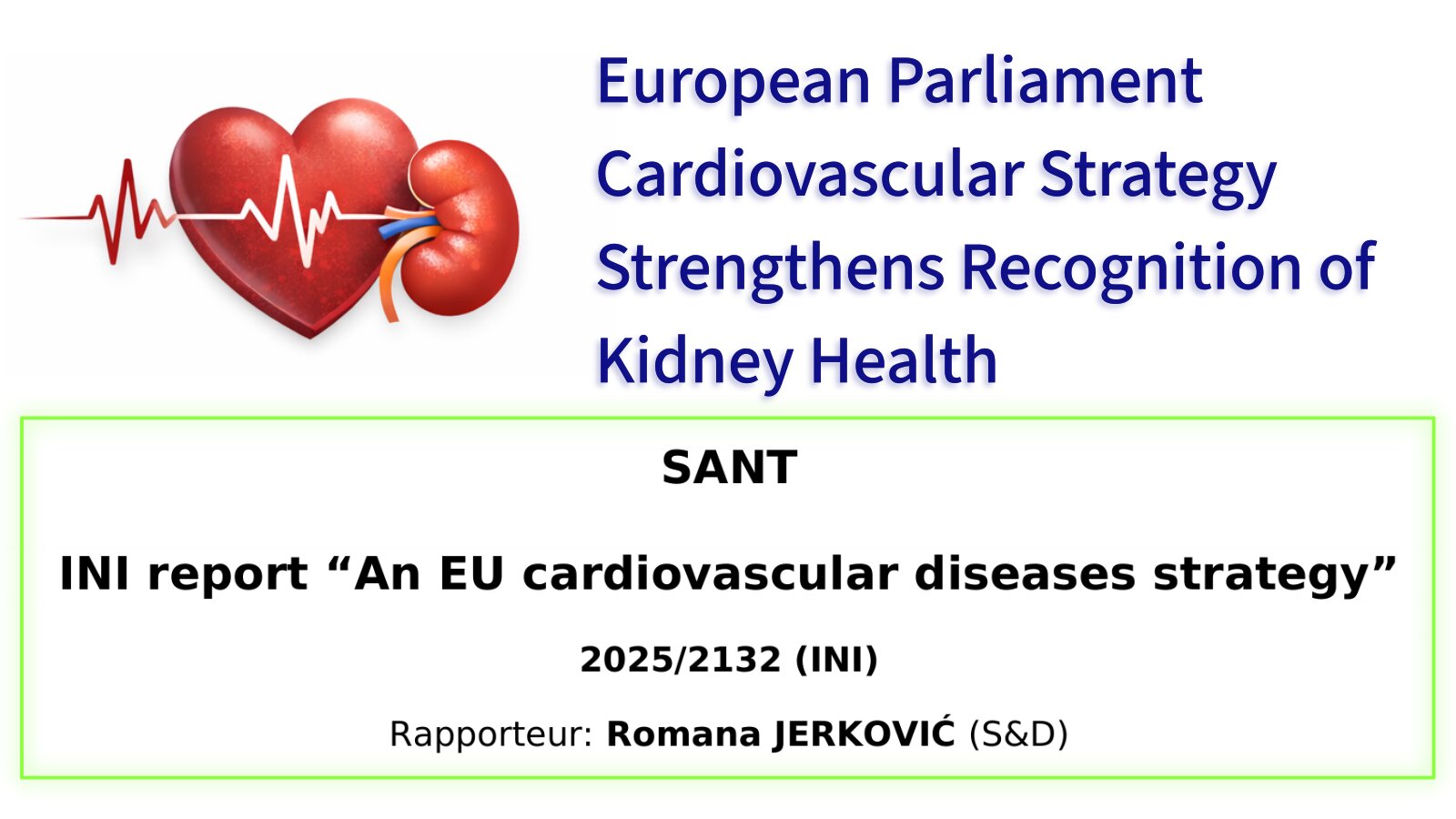
The European Parliament’s Committee on Public Health (SANT) has voted in favour of its own-initiative (INI) report on an EU Cardiovascular Diseases Strategy, marking an important political milestone in the development of European cardiovascular policy.
The report represents the European Parliament’s public health committee’s position on the European Commission’s Safe Hearts Plan, published on 16 December 2025, and provides a clear set of recommendations to strengthen prevention, early detection, treatment, integrated care and research across the cardiovascular disease pathway.
Notably, the rapporteur of the INI report, MEP Romana Jerković, has long been engaged in advancing kidney health on the EU agenda and hosts the annual 2026 European Kidney Forum organised by EKHA, a leading platform for dialogue between European institutions, healthcare professionals, patient organisations and policymakers on the future of kidney health in Europe..
Following the committee vote, the report will move to the European Parliament plenary for final adoption, and the vote is scheduled for September.
A Significant Step for Integrated Health Policy
Cardiovascular diseases remain the leading cause of death across Europe and are closely linked with a range of other chronic conditions. The SANT Committee report reflects a growing recognition that effective cardiovascular policy cannot focus on heart disease alone but must address the broader network of interconnected non-communicable diseases (NCDs).
One of the most significant developments in the final compromise amendments is the strong and consistent inclusion of chronic kidney disease (CKD) throughout the report.
The final text acknowledges that chronic kidney disease is both a major NCD in its own right and a critical contributor to cardiovascular risk, outcomes and healthcare burden.
Kidney Health Recognised Across the Cardiovascular Care Continuum
The adopted report integrates kidney health into multiple sections of the strategy.
Chronic Kidney Disease Recognised Among Major NCDs
The report calls for coordinated prevention approaches addressing cardiovascular disease and its interconnected risk factors and comorbidities, including major non-communicable diseases such as diabetes, obesity and kidney disease.
This recognition reinforces the need for a comprehensive and integrated approach to chronic disease management across Europe.
Early Detection and Screening
The report identifies people living with chronic kidney disease as a priority population for cardiovascular screening and risk assessment.
It highlights the importance of targeted, risk-based approaches to early detection and recommends that health systems ensure effective referral mechanisms and long-term follow-up pathways for individuals at increased cardiovascular risk.
This is particularly important given the high proportion of people living with CKD who remain undiagnosed until the disease has reached advanced stages.
Recognising Multimorbidity
The report also addresses the reality that many patients live with multiple chronic conditions simultaneously.
Chronic kidney disease is specifically included among conditions that frequently coexist with cardiovascular disease, increase cardiovascular risk, complicate treatment decisions and worsen health outcomes.
By recognising multimorbidity as a central challenge, the report encourages healthcare systems to move beyond disease-specific silos and adopt more coordinated approaches to care.
Strengthening the Cardio-Kidney Connection
A particularly welcome addition is the dedicated recognition of the relationship between kidney disease and cardiovascular disease.
The report notes that kidney disease is frequently underdiagnosed among people with cardiovascular risk factors and highlights the need to better integrate kidney health into cardiovascular risk assessment and prevention strategies.
This reflects growing scientific evidence demonstrating the close biological and clinical relationship between the heart and kidneys and the importance of addressing both together.
Integrated Care Pathways
The report calls for more integrated, person-centred care pathways that can effectively support individuals living with cardiovascular disease and coexisting chronic conditions.
Rather than relying on fragmented care models, the report promotes coordinated approaches involving multidisciplinary teams and long-term disease management.
This is particularly relevant for patients living with both cardiovascular disease and chronic kidney disease, who often require complex and coordinated care.
Research and Innovation
The report also highlights the importance of research into the links between cardiovascular disease and related chronic conditions.
Kidney disease is included among the areas identified for future European research investment alongside diabetes, obesity, metabolic dysfunction-associated steatotic liver disease (MASLD) and other comorbidities.
This recognition opens new opportunities to advance understanding of cardio-kidney-metabolic diseases and improve outcomes through innovation and evidence generation.
EKHA’s Contribution
The European Kidney Health Alliance (EKHA) welcomes the adoption of the report and the strong inclusion of kidney health throughout the final text.
These achievements reflect sustained engagement with policymakers throughout the legislative process and a shared commitment to ensuring that kidney disease receives the attention it deserves within broader non-communicable disease and cardiovascular policy discussions.
EKHA has consistently advocated for the recognition of chronic kidney disease as a major public health challenge and for the integration of kidney health into cardiovascular prevention, screening, treatment and research initiatives.
The final report demonstrates that these messages have been heard.
Looking Ahead
The upcoming plenary vote will be the next important step in the parliamentary process.
If adopted, the report will provide a strong political mandate for a more comprehensive implementation of the European Commission’s Safe Hearts Plan and reinforce the need for integrated cardio-kidney-metabolic approaches across Europe.
For patients, healthcare professionals and policymakers alike, the message is clear: improving cardiovascular outcomes requires recognising the critical role of kidney health.
The European Kidney Health Alliance will continue working with European institutions and stakeholders to ensure that this recognition translates into meaningful policy action and better outcomes for millions of people across Europe living with kidney disease and cardiovascular conditions.