Feedback from European Kidney Health Alliance on the future EU Council Recommendation on Cardiovascular Diseases – Health Checks
The European Commission has launched a new initiative on Cardiovascular Diseases – Health Checks, paving the way for a future EU Council Recommendation focused on prevention, early detection and coordinated care across Europe. The initiative aims to strengthen public health systems through more structured screening approaches and earlier identification of people at risk of cardiovascular disease.
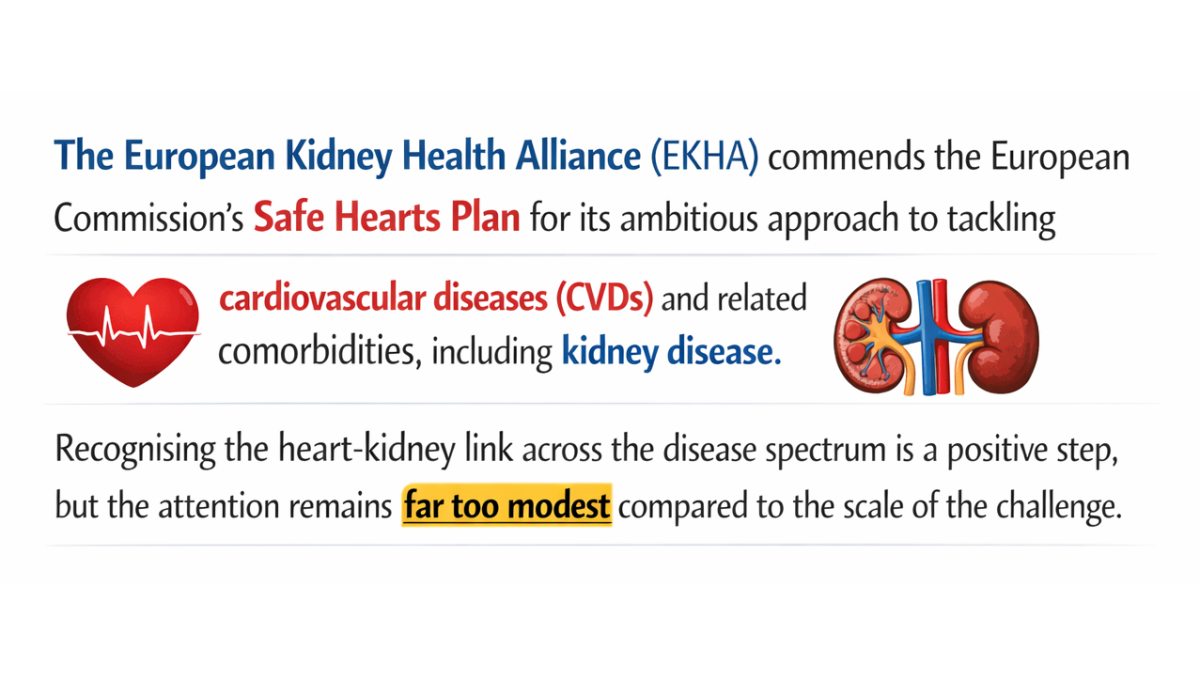
Within this important European discussion, the European Kidney Health Alliance (EKHA) has submitted a strong and forward looking contribution, calling for a broader and more integrated approach that fully recognises the close relationship between heart health and kidney health.
Kidney disease and cardiovascular disease are deeply interconnected. Chronic Kidney Disease (CKD) is one of the strongest amplifiers of cardiovascular risk, yet millions of Europeans remain undiagnosed because kidney disease often develops silently for years before symptoms appear. At the same time, cardiovascular complications remain one of the leading causes of death among people living with CKD.
EKHA therefore urges the European Commission to move beyond a purely cardiovascular perspective and adopt fully integrated Cardio-Renal-Metabolic health checks. This approach reflects the growing scientific consensus that prevention strategies must address heart, kidney and metabolic health together rather than separately.
In its submission, EKHA highlights the importance of including routine kidney screening alongside established cardiovascular assessments such as blood pressure, glucose and BMI measurements. Specifically, EKHA recommends:
- Serum creatinine testing for estimation of glomerular filtration rate (eGFR)
- Urinary albumin : creatinine ratio (uACR) testing to detect early kidney damage
These tests are simple, affordable and non invasive, yet they can identify kidney disease years before kidney function significantly declines. Early detection is now more important than ever because innovative therapies are available that can slow CKD progression and significantly reduce cardiovascular and kidney complications, including the need for dialysis or transplantation.
EKHA also stresses that integrated prevention strategies can improve coordination between specialties and support more effective healthcare systems across Europe. With CKD projected to become the fifth leading cause of death globally by 2050, the need for action is urgent.
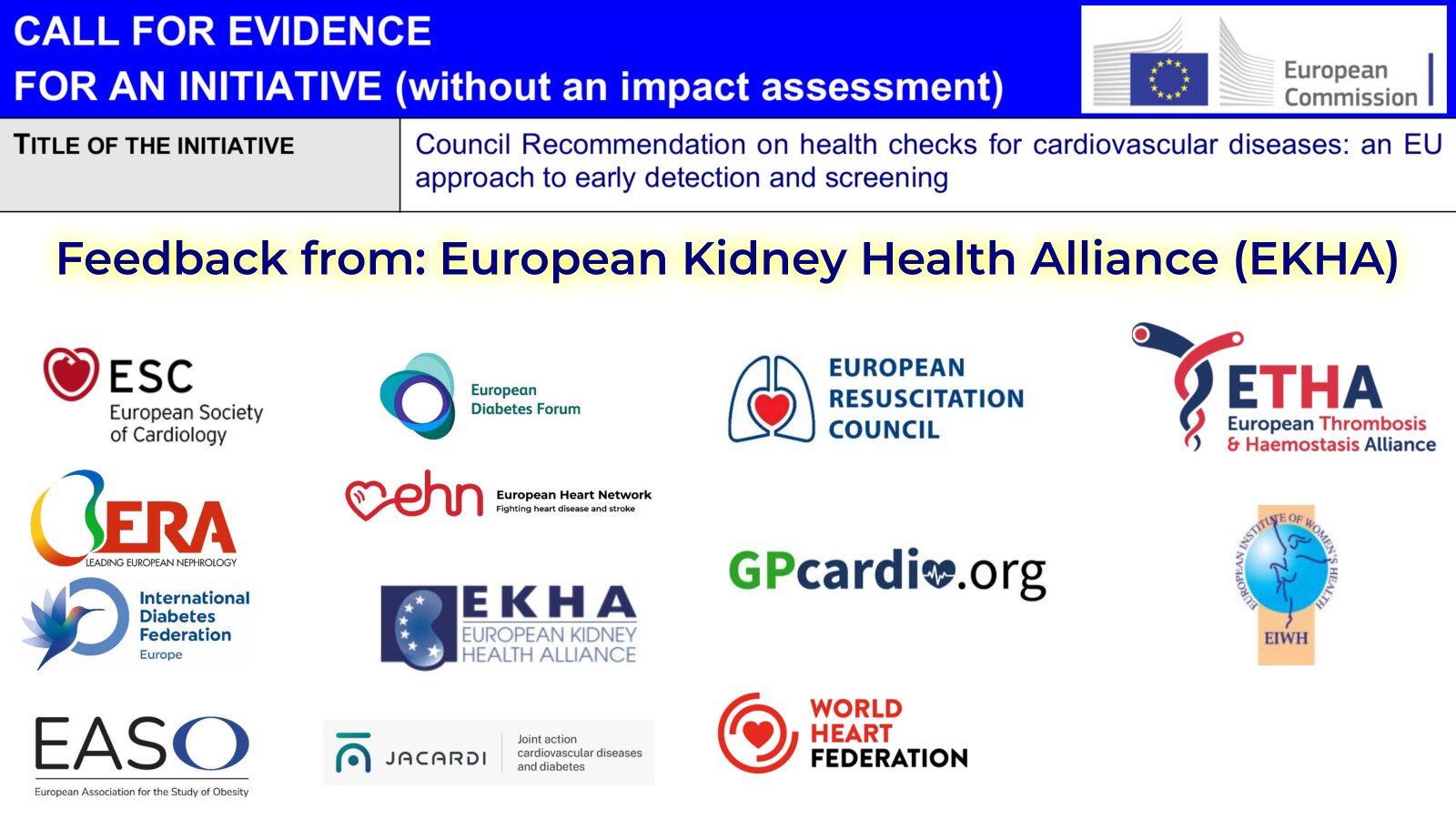
Importantly, EKHA’s contribution reflects a broad collaborative effort across the European health community. EKHA contributed to the wider European Alliance for Cardiovascular Health protocol and joined forces with leading organizations representing cardiovascular, kidney, diabetes and obesity communities. The Task Force proposal was developed together with organizations including the European Society of Cardiology, European Renal Association, European Diabetes Forum, European Heart Network, International Diabetes Federation Europe, European Association for the Study of Obesity, and others.
The proposed protocol advocates structured cardiovascular-renal-metabolic health checks across different age groups, integrating assessment of lifestyle, blood pressure, lipid profile, diabetes markers, kidney function and obesity related risk factors into a unified prevention framework.
EKHA welcomes the European Commission’s leadership on prevention and calls for ambitious action that fully integrates kidney health into Europe’s future cardiovascular prevention strategy.