Implementing WHO global kidney health commitments could improve millions of lives
Chronic kidney disease is one of the world’s fastest growing health challenges, affecting an estimated 850 million people globally. Yet despite its enormous impact, kidney disease has often received less international attention than other major non communicable diseases.
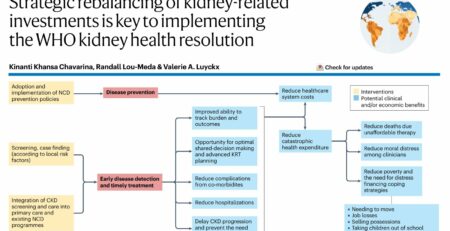
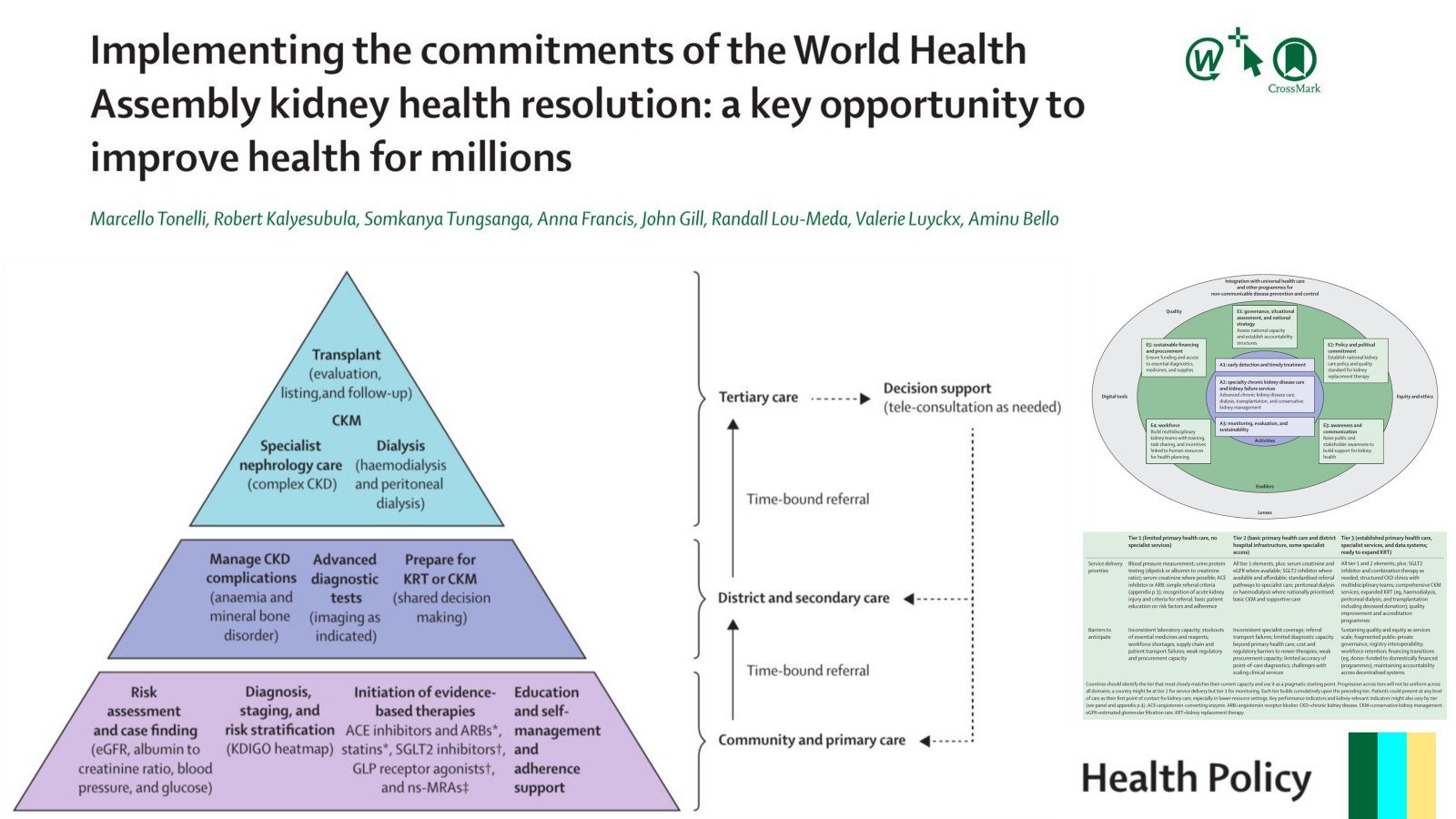
A new Health Policy article co-authored by the EKHA Co-President Valerie Luyckx and published in The Lancet explores how countries can put recent global kidney health commitments into action and improve care for millions of people worldwide.
In 2025, the World Health Assembly adopted a landmark kidney health resolution calling on member states to strengthen prevention, early diagnosis, treatment, and access to kidney replacement therapy. This was followed by support within the United Nations Political Declaration on non communicable diseases and mental health.
This paper explains that these commitments represent a major opportunity for governments and health systems. However, meaningful progress will depend on practical implementation, long term political commitment, reliable funding, and systems that can measure progress and outcomes. Strengthening screening and kidney disease management within primary care systems could help reduce preventable complications and improve earlier intervention, especially for high risk populations.
The article highlights several priority actions:
- Integrating kidney care into national health plans
- Strengthening primary care services for earlier diagnosis and management
- Expanding access to dialysis and kidney transplantation
- Improving prevention strategies linked to diabetes and other risk factors
- Building stronger data systems to monitor outcomes and investment impact
The paper also draws attention to major global inequalities in kidney care. Many low income and middle income countries continue to face limited access to life saving treatment and specialist services. The authors argue that better kidney health policies could reduce preventable illness, improve quality of life, and strengthen health systems overall.
As chronic kidney disease continues to rise worldwide, this article provides a practical roadmap for translating global policy commitments into meaningful public health action.