Future-proof dialysis: giving patients more choice, improving quality of life and accelerating innovation in Europe
For people living with kidney failure, dialysis is not an abstract medical technology. It is a life-saving treatment that makes everyday life possible for thousands of patients. But it is also a treatment that can require significant time, planning and adjustment, affecting work, travel, family life and the home.
The challenge for Europe is therefore not simply to provide access to dialysis for patients who cannot receive a kidney transplant. It is to make dialysis better, more flexible, more sustainable and more responsive to the lives of the people who depend on it.
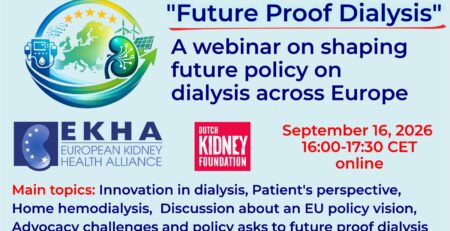
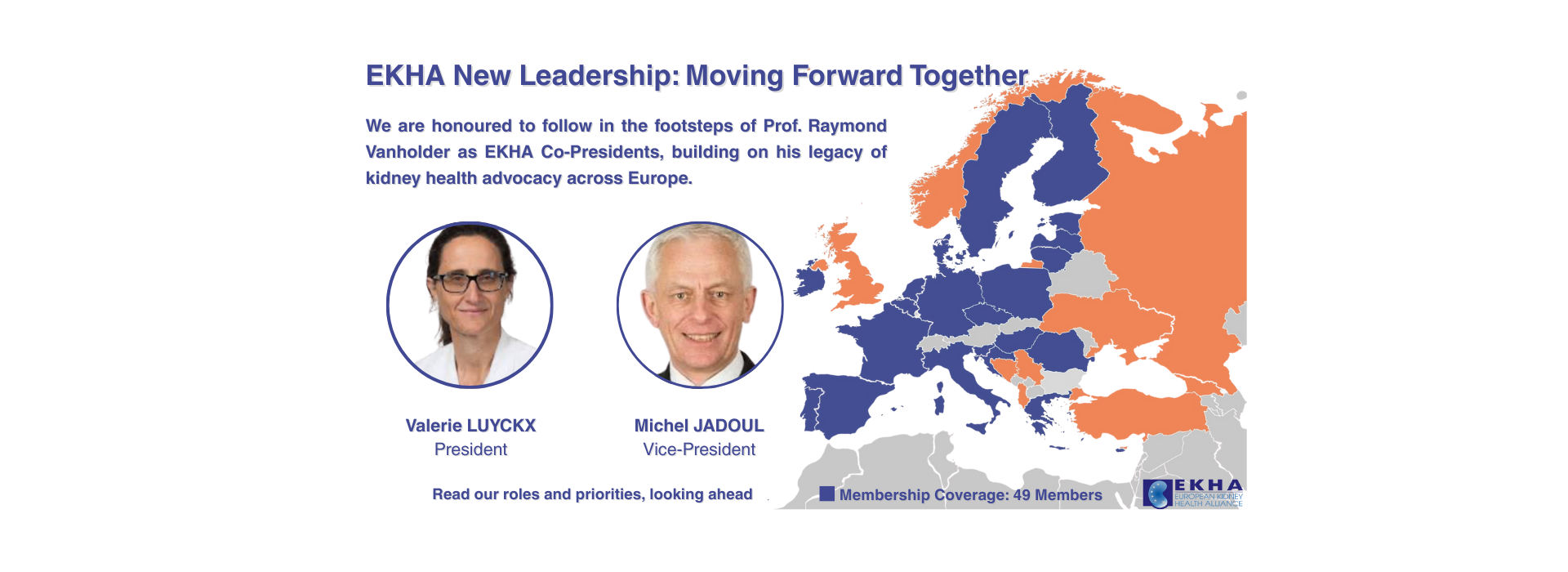
This was at the heart of the webinar on future-proof dialysis organised by the European Kidney Health Alliance (EKHA) and the Dutch Kidney Foundation, bringing together clinicians, patients, researchers, innovators and kidney health advocates. Moderated by Professor Michel Jadoul, the discussion connected the patient experience with clinical practice, technological development and the wider European policy environment. It highlighted an important principle for the future of kidney replacement therapy: there is no single dialysis modality that is right for every patient. In-centre haemodialysis, home haemodialysis and peritoneal dialysis each have an important place in care. The objective should be to ensure that patients have genuine access to the modality that best responds to their clinical situation, circumstances and preferences.
The message is particularly relevant at a time when Europe is confronting workforce shortages, pressure on health systems and the need to make healthcare more sustainable. Dialysis innovation can contribute to all three objectives, while improving the daily experience of patients.
Dialysis saves lives, the next challenge is to make treatment fit better into life
Kidney failure still occurs despite advances in prevention, early diagnosis and treatment. For patients who cannot receive a kidney transplant, who are waiting for one, or for whom transplantation is not an appropriate option, dialysis remains essential. As highlighted during the webinar, Europe cannot envisage kidney care without dialysis.
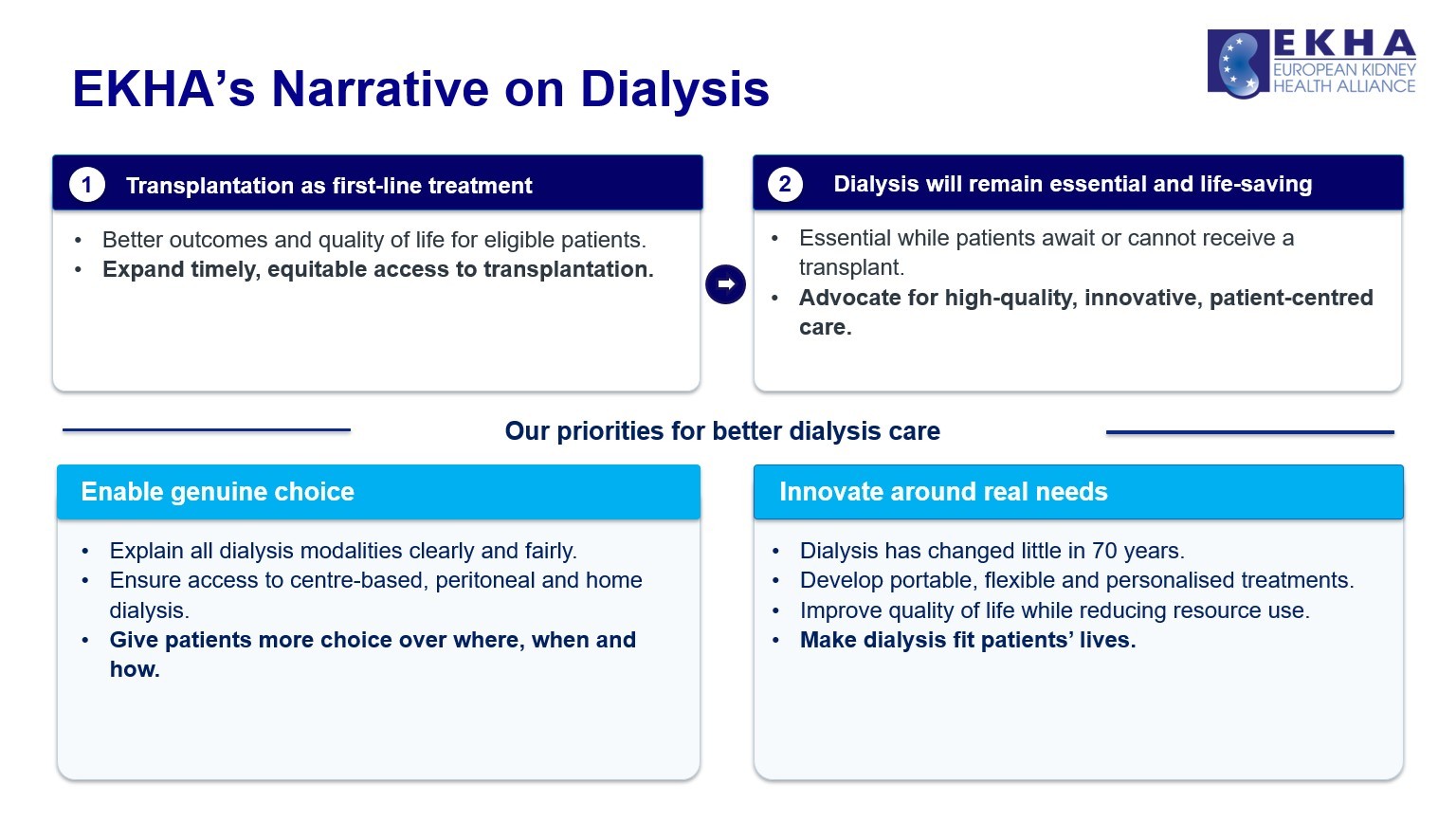
This principle framed the discussion from the beginning. Professor Michel Jadoul, the EKHA co-President, placed dialysis within the broader kidney health agenda, where prevention, early detection and better treatment should reduce the progression of kidney disease, while transplantation and high-quality dialysis must remain available for people who develop kidney failure. Alberto Nario Loken further underlined EKHA’s position that, while equitable access to transplantation should be expanded, dialysis remains an essential and life-saving treatment that must become increasingly patient-centred and innovative.
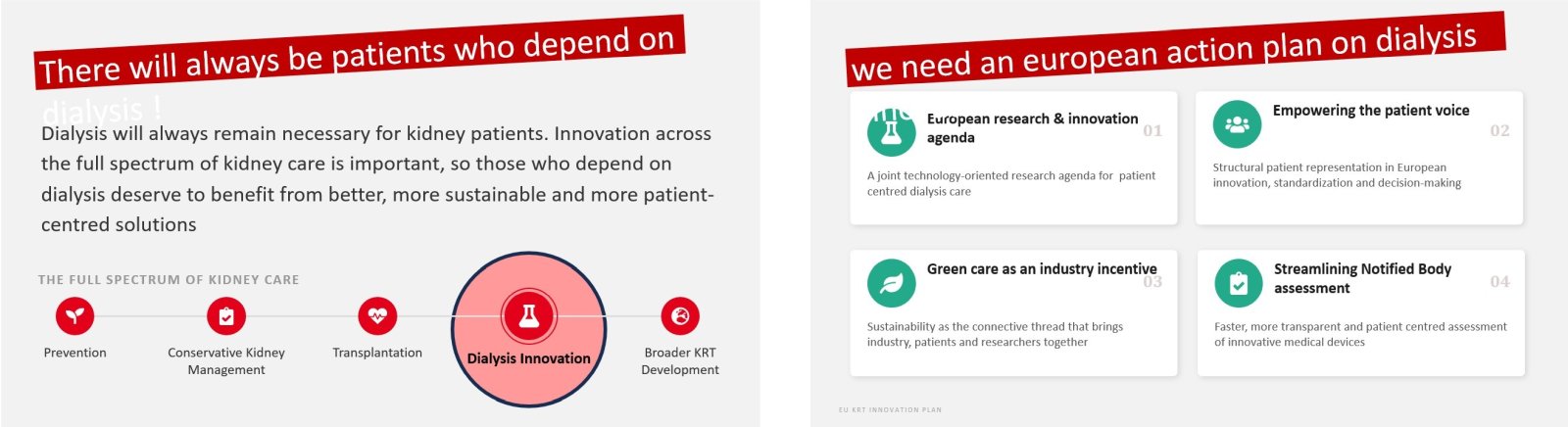
Tom Oostrom, Managing Director of the Dutch Kidney Foundation and member of the EKHA Board of Directors, reinforced this message later in the webinar. For the foreseeable future, he argued, there will continue to be patients who depend on dialysis, including people waiting for transplantation and those for whom transplantation is not an option. Innovation must therefore extend across the full spectrum of kidney care, ensuring that people who rely on dialysis also benefit from better, more sustainable and more patient-centred solutions.
The question is therefore not whether dialysis is needed, but how it can continue to improve.
Patient-centred dialysis means looking beyond whether a treatment successfully performs its clinical function. It also means considering how much time patients spend travelling to treatment, how treatment affects their ability to work, whether they can travel, how equipment fits into their home, how easy it is to operate and how much control they retain over their daily routine.
These questions become particularly powerful when seen through the experience of a patient. Tugrul Irmak described his personal experience of becoming dependent on dialysis as a young adult, at a moment in life when he was thinking about his career, relationships and future. Dialysis kept him alive, and he was clear about how fundamental it became to his existence. At the same time, his experience of peritoneal dialysis highlighted practical aspects of current equipment and treatment that can interfere with patient comfort and everyday life.
Dialysing at home allowed him to continue working and gave him greater control over his treatment schedule. It also enabled him to travel. Yet the treatment brought medical equipment and the need for storage of dialysis fluid and supplies directly into his living environment. Storage became part of household planning, setting up the equipment took time, machine noise affected sleep, and travelling meant transporting substantial quantities of supplies.
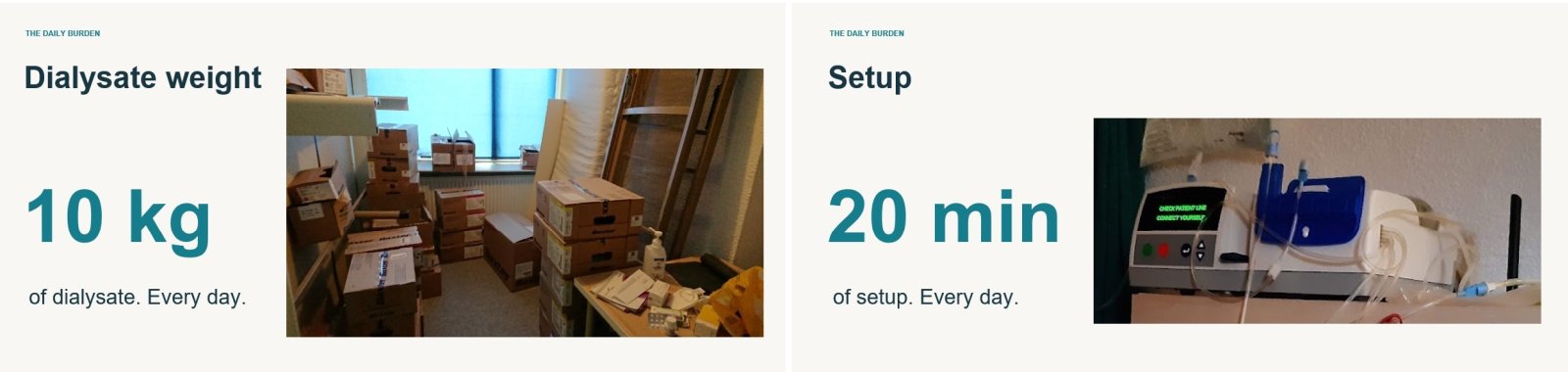
These are arguments to systematically reduce the burden of dialysis and to find a better solution. They demonstrate why patient experience should become an integral part of how technologies are designed, assessed and improved. A quieter machine, a faster set-up process, a smaller device, fewer supplies and greater portability can translate directly into more time, more independence and greater comfort for patients.
Different patients need different dialysis options
One of the strongest messages from Professor Raymond Vanholder, the EKHA past-President, was that the future should not be framed as a competition between dialysis modalities. Home haemodialysis and peritoneal dialysis are complementary, not competing, approaches. In-centre haemodialysis also continues to have an essential role. Different modalities respond to different clinical requirements, personal circumstances, levels of independence and patient preferences.
A future-proof dialysis system should therefore not simply try to move every patient towards one model of care. It should create the conditions for meaningful choice.
For some patients, treatment in a dialysis centre provides the clinical supervision and support they need. For others, peritoneal dialysis at home can provide greater autonomy and flexibility. For appropriately selected and supported patients, home haemodialysis can provide another important option, allowing treatment schedules to be adapted more closely to personal and clinical needs.
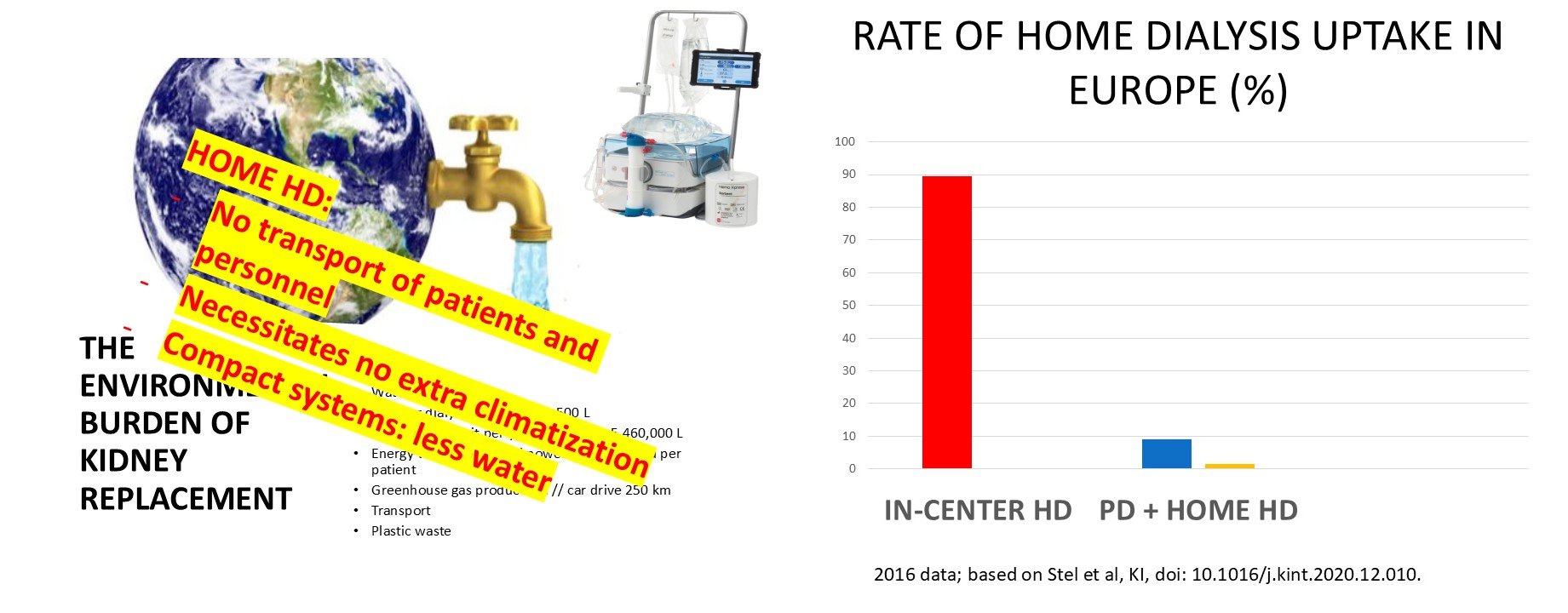
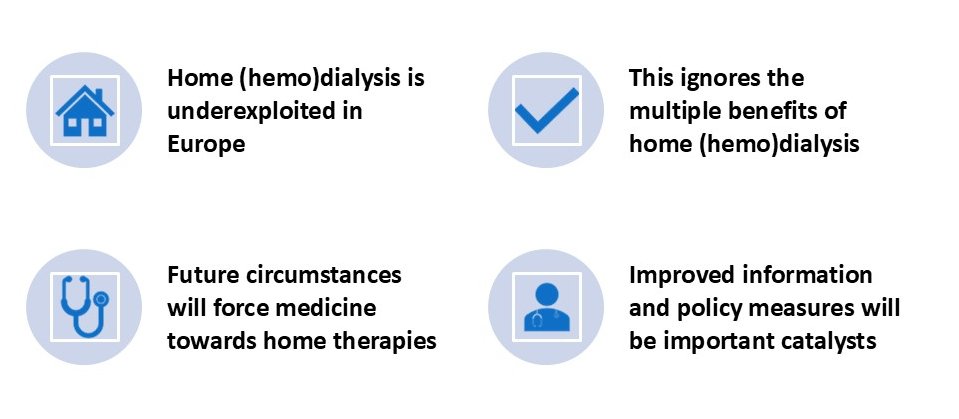
Prof. Vanholder highlighted the additional flexibility offered by home haemodialysis. Treatment can potentially be organised around different schedules, including more frequent or longer sessions, approaches that are often more difficult to organise in a dialysis centre. Despite these benefits, home hemodialysis represents only 1.5% of treatments in Europe compared to 90% for in-center hemodialysis He also linked the discussion to Europe’s healthcare workforce challenge, noting that home treatment may become increasingly important as health systems face shortages of specialised personnel.
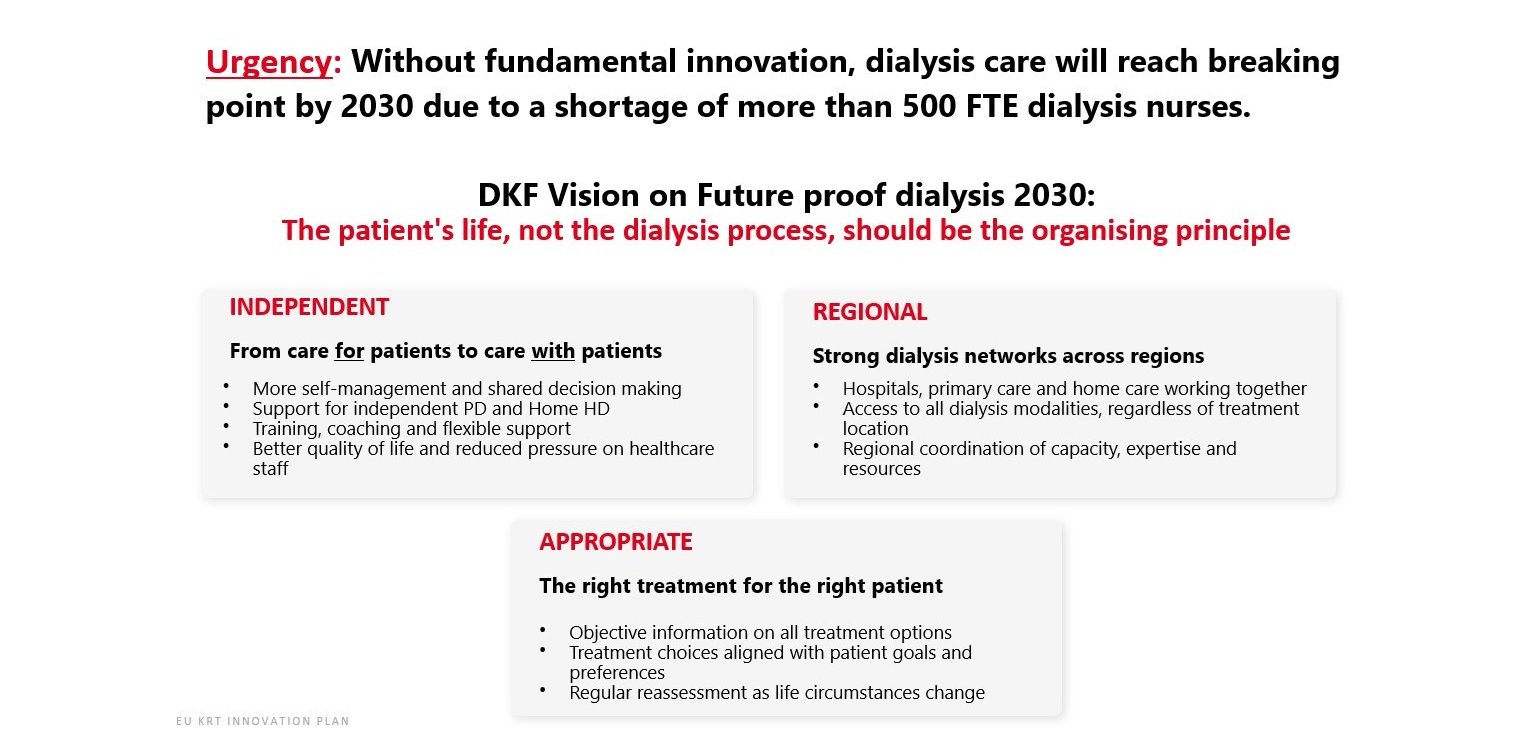
The policy objective should therefore be broader than promoting one technology. Europe should work towards a dialysis ecosystem in which different modalities are available, patients receive understandable and balanced information about them, healthcare professionals are equipped to discuss them, and the final decision reflects both medical needs and the patient’s life.
Choice on paper is not enough. Choice must be accessible in practice.
Home dialysis remains an underused part of the European treatment landscape
Despite its potential advantages, home haemodialysis remains relatively uncommon in Europe.
Prof. Vanholder highlighted a striking imbalance between the potential of home treatment and its uptake. In-centre haemodialysis continues to dominate dialysis provision, while home haemodialysis represents only a very small proportion of treatment.
Home haemodialysis can give appropriate patients greater flexibility and reduce time spent travelling to and waiting for treatment. Treatment timing can be adjusted more closely to individual circumstances. It may also help address some of the structural challenges confronting European healthcare.
But increasing access requires more than purchasing new machines. Prof. Vanholder pointed to a cycle that can reinforce low uptake. When home haemodialysis is rarely used, healthcare professionals have fewer opportunities to develop experience with it. Limited experience can mean less training and less information for patients. Patients who do not receive sufficient information are then less likely to consider the option.
Breaking this cycle requires investment in education, training and awareness among both healthcare professionals and patients. It also requires policymakers and health systems to look carefully at the incentives built into dialysis care, and at the practical support patients may need if they are to receive treatment at home.
The discussion moderated by Prof. Jadoul also brought out an important European dimension. Arrangements for home dialysis, including support for adaptations to the home and reimbursement of additional water and electricity costs, can differ considerably between countries. These differences matter because moving treatment from a healthcare facility into a patient’s home should not mean transferring unreasonable costs or practical burdens to the patient.
Reimbursement and healthcare organisation can shape patient choice
Healthcare systems do not operate in a vacuum. The way services are funded, organised and evaluated can influence which treatments become widely available.
Prof. Vanholder used international experience to illustrate the importance of reimbursement. Where financial structures favour one form of dialysis, providers may have fewer incentives to develop alternatives. Where reimbursement is more neutral or reflects actual costs, structural barriers to home treatment can be reduced.
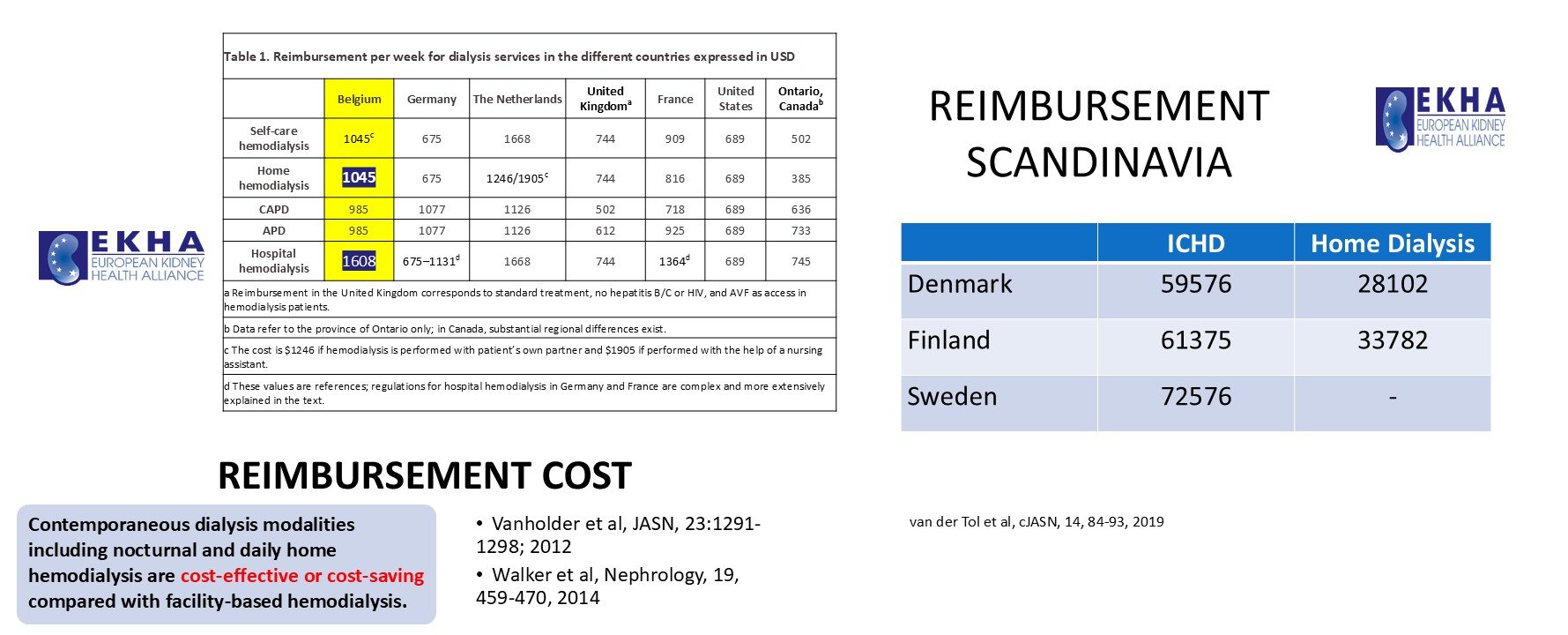
Tom Oostrom took this argument further by describing what the Dutch Kidney Foundation sees as a broader institutional challenge. Medical and logistical services, reimbursement mechanisms and quality systems have largely developed around established models of in-centre dialysis. Together, these structures can create powerful incentives to maintain the status quo, even when new technologies and models of care become possible.
This is why innovation in dialysis cannot be treated as a technology question alone. A new device can be clinically effective and attractive to patients, yet still struggle to become part of routine care if reimbursement, procurement, regulation, professional practice and healthcare organisation remain designed around an older model.
Differences between dialysis centres can also reflect institutional culture, experience and confidence. Some centres have developed strong home dialysis programmes, while others have not. This means that two patients with similar clinical circumstances may encounter very different treatment possibilities depending on where they receive care.
Policy can help reduce this variability. Training programmes, transparent benchmarking, patient education, appropriate reimbursement and support for assisted home dialysis can all contribute to an environment in which treatment decisions are based more strongly on patient and clinical needs.
The objective is not to create a new default modality. It is to remove avoidable barriers between patients and the full range of appropriate treatment options.
Patient-centred innovation starts with details that matter every day
Innovation in dialysis is sometimes discussed in terms of transformative scientific breakthroughs. Those ambitions are important, but Tugrul Irmak’s experience illustrated why incremental engineering improvements can also have significant value.
Consider a machine used beside a patient’s bed, noise matters. Consider treatment that must be prepared every day, set-up time matters. For a patient who wants to visit family or travel, weight, size and portability matter. For home dialysis requiring significant quantities of fluid and supplies, storage and waste matter.
These features can appear secondary when compared with traditional clinical measures, yet they can substantially influence how treatment fits into a patient’s life.
Patient-centred innovation therefore requires a broader definition of performance. Safety and clinical effectiveness remain fundamental, but designers, researchers and health systems should also ask how technologies affect autonomy, sleep, mobility, work, relationships and the use of space at home.
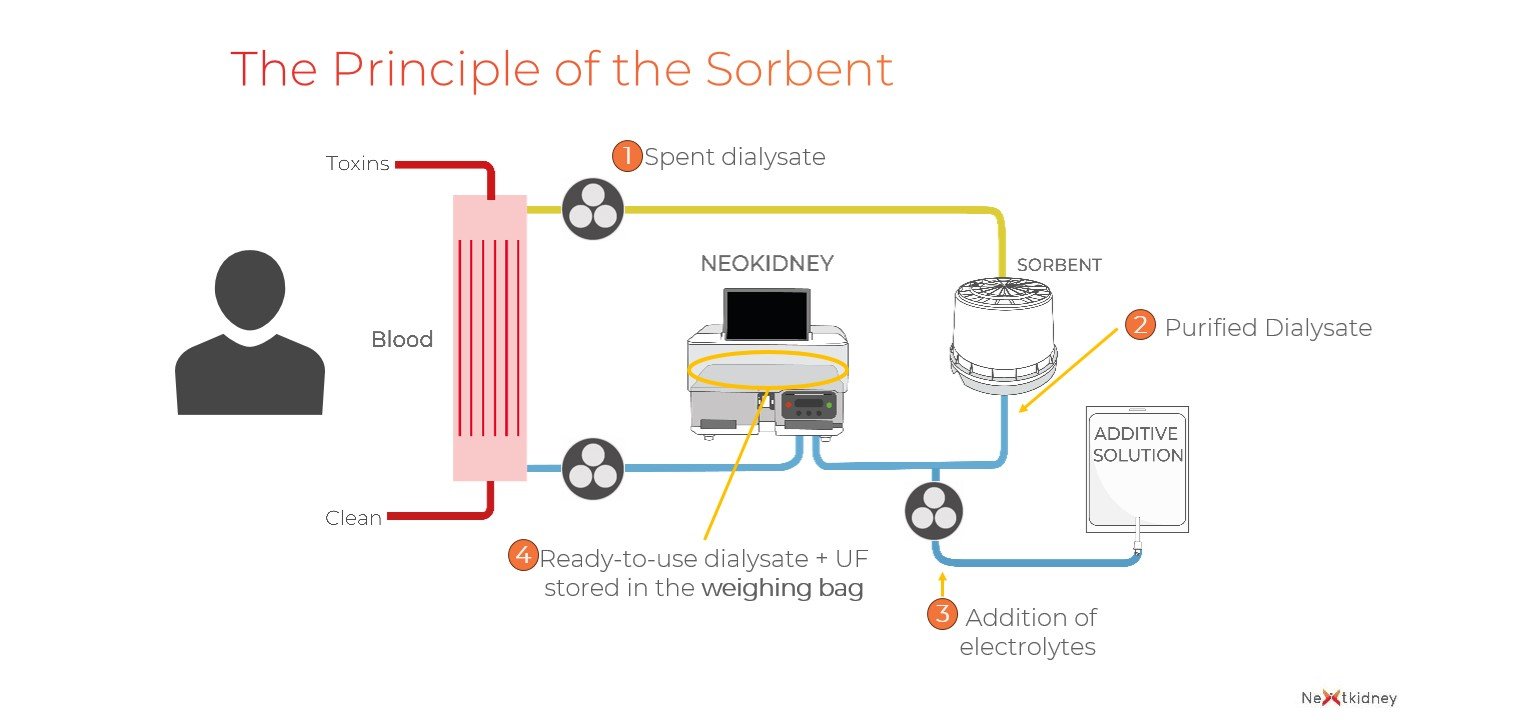
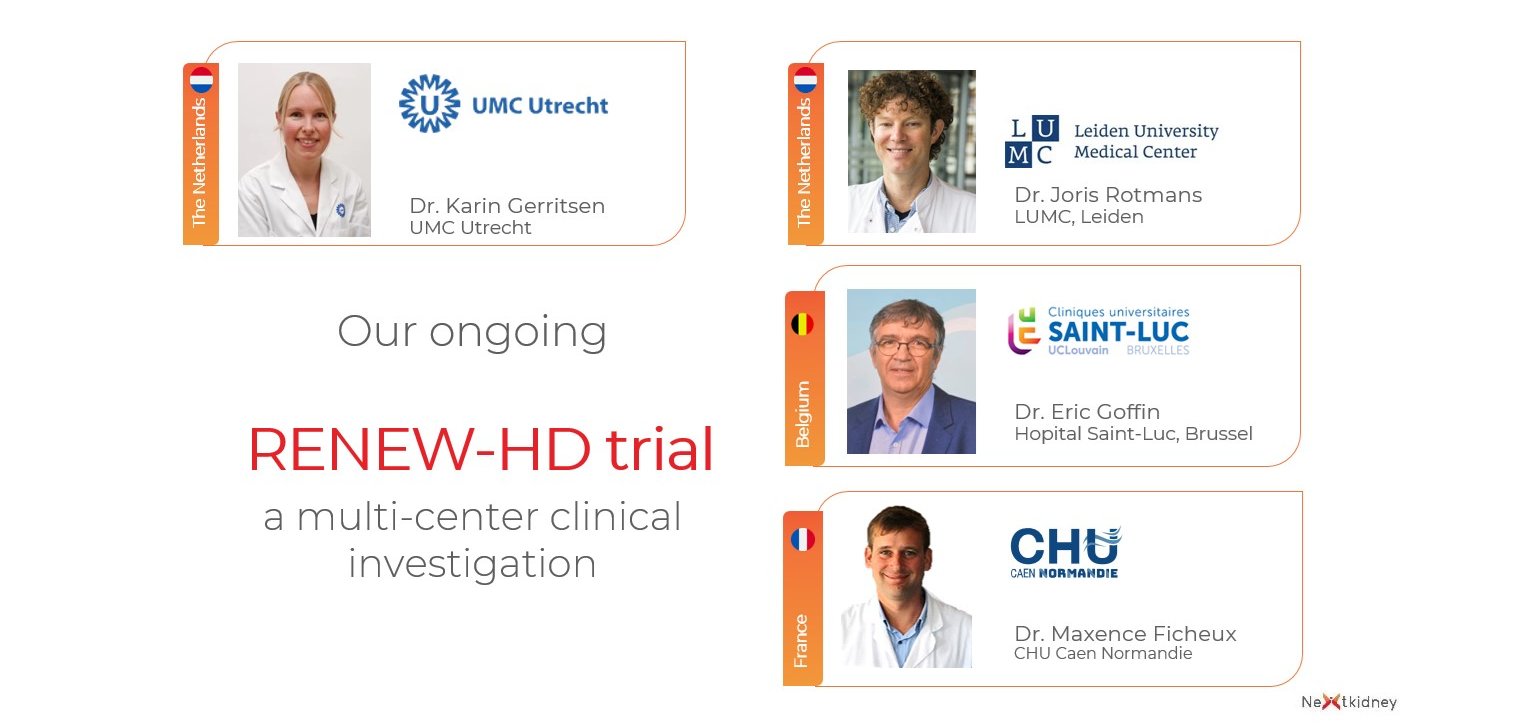
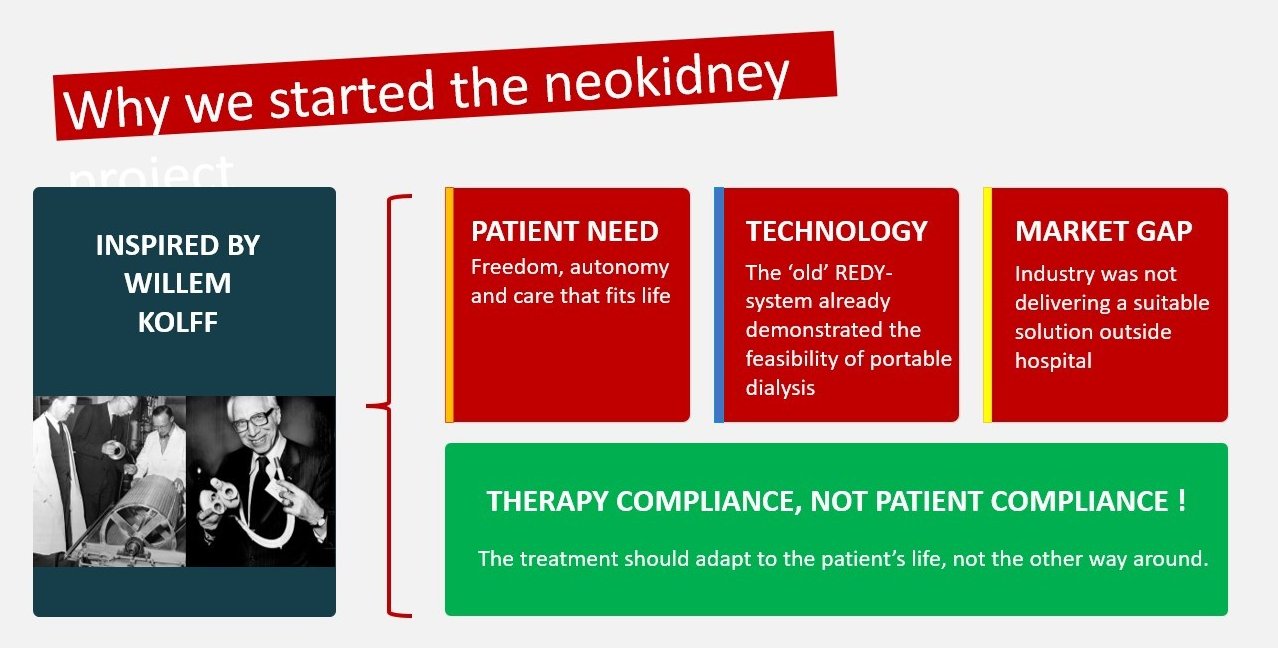
Prof. Dieter Bach, Chief Medical Officer of NextKidney, provided a concrete example of how technological development can respond to some of these challenges. Drawing on more than four decades in nephrology, he argued that dialysis has saved millions of lives, but that it is now necessary to rethink aspects of how treatment is delivered. He presented the NeoKidney project as an effort to systematically reduce treatment burden by making haemodialysis more portable and easier to use outside the conventional dialysis centre.
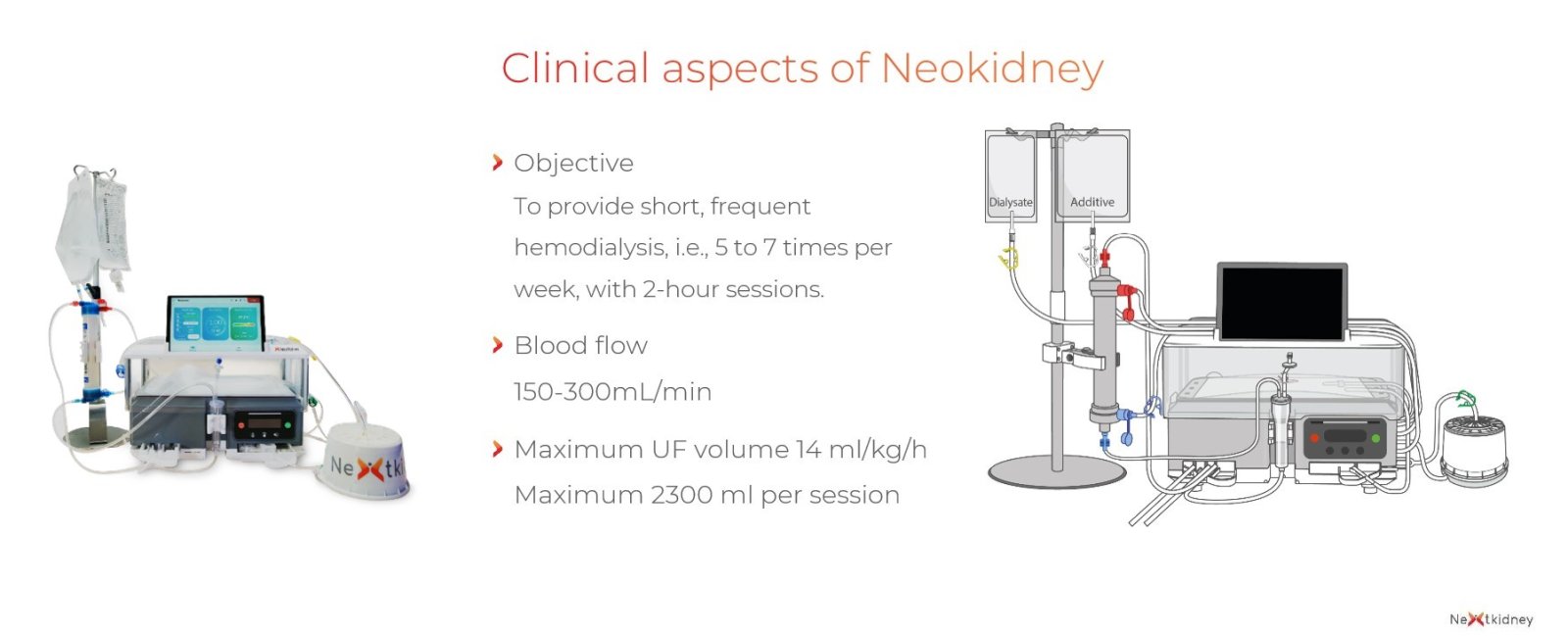
The concept moves the discussion from home dialysis towards what could increasingly be understood as mobile dialysis. The ambition is not simply to relocate a conventional large dialysis machine from a clinic into a patient’s house. It is to develop a system that is genuinely portable, easier to handle and designed around greater independence.
Prof. Bach repeatedly returned to one principle: the patient comes first. A future home dialysis device should therefore aim to be straightforward to learn and operate, minimise technical difficulties and, where clinically possible, enable patients to use it independently rather than making treatment dependent on the permanent presence of another person.
Tugrul’s story makes the policy challenge tangible, while Prof. Bach’s presentation illustrates how patient experience can inform engineering. Dialysis equipment should not only perform treatment effectively. Wherever technologically and clinically possible, it should reduce the footprint that treatment leaves on the rest of a patient’s life.
Innovation can also make dialysis more sustainable
The case for dialysis innovation extends beyond individual patient experience.
The presenters highlighted the environmental dimension of dialysis, particularly transport, energy use and water consumption. Home treatment can reduce the need for repeated patient transport to dialysis centres, while compact technologies may reduce some of the infrastructure and resource requirements associated with conventional treatment.
Prof. Vanholder highlighted how reduced transport, lower infrastructure requirements and more efficient use of water could contribute to greener dialysis. He also referred to emerging dialysate regeneration technologies that could substantially reduce the amount of fluid required for treatment.
Prof. Bach connected this environmental objective directly to technological development. In his presentation of the NeoKidney system, he highlighted a design based on regenerating a relatively small volume of dialysis fluid rather than relying on the much larger volumes associated with conventional approaches. The system is undergoing clinical development, with the next stage intended to move beyond supervised treatment settings towards use in the home.
This combination of patient benefit and environmental benefit is important for European policy. Healthcare systems are being asked simultaneously to improve outcomes, respond to workforce pressures and reduce their environmental footprint. Technologies that can help address several of these objectives should receive appropriate attention within European research and innovation strategies.
Tom Oostrom suggested going one step further and seeing green dialysis not only as an environmental agenda, but also as an innovation agenda. Sustainability can create a common objective around which patients, healthcare providers, industry and policymakers can align. In this sense, greener dialysis can become a driver for technological change rather than simply an additional requirement imposed on healthcare.
Sustainable dialysis should therefore be understood broadly. It means reducing environmental impact, but also creating models of care that remain deliverable as healthcare workforces come under increasing pressure.
Europe needs innovation that reaches patients, not only innovation that works in the laboratory
The webinar also exposed a wider challenge. Europe does not lack ideas.
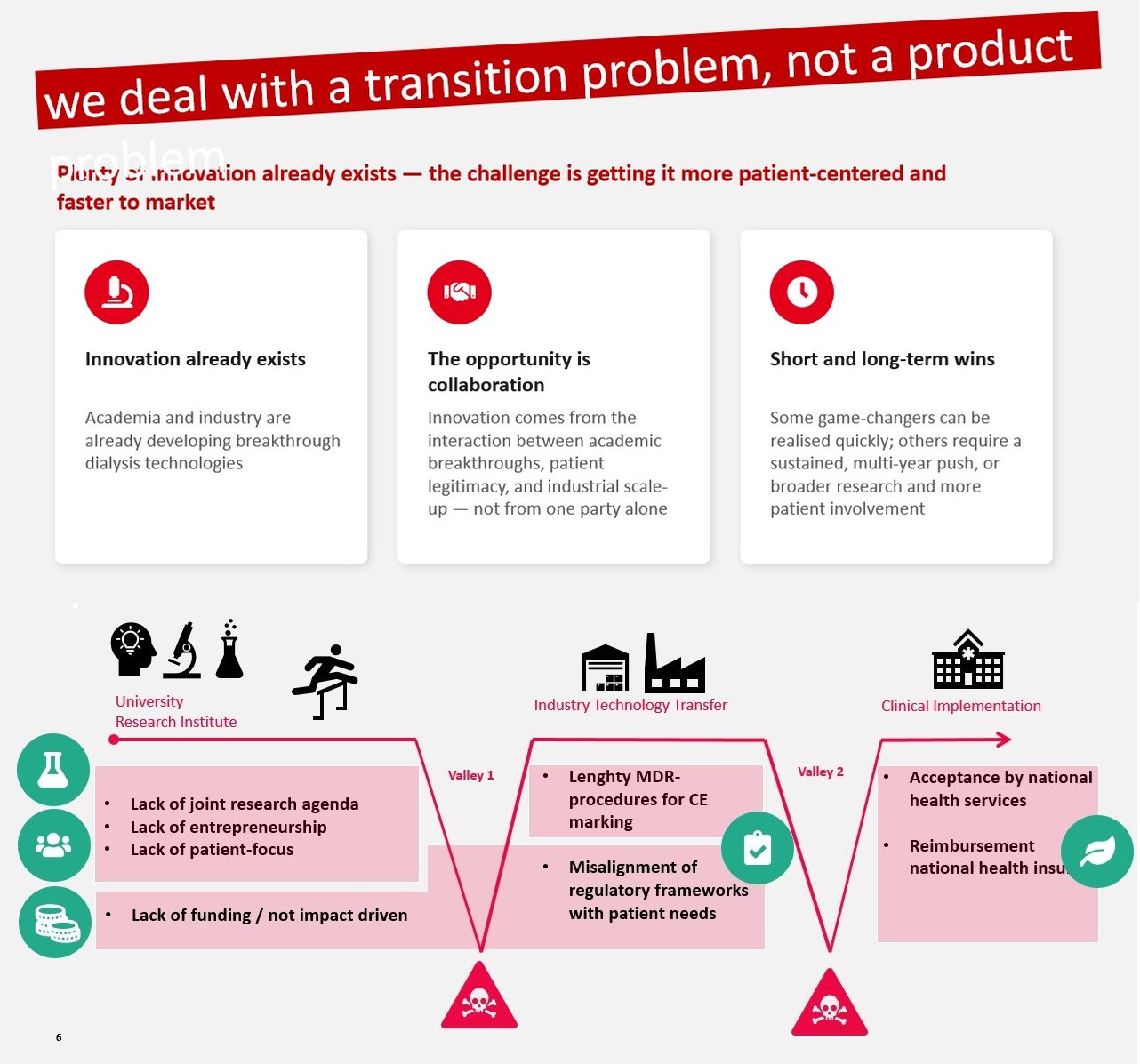
Researchers, companies, patient organisations and foundations are already developing new approaches to kidney replacement therapy. The difficult part is moving promising innovation from research to development, from development through regulatory and reimbursement pathways, and ultimately into routine patient care.
Tom Oostrom described this as a transition problem. In the experience of the Dutch Kidney Foundation, the dialysis sector does not primarily suffer from an absence of promising technologies. Universities, researchers and companies are already developing them. The central challenge is translating those innovations into solutions that actually reach patients.
The Dutch Kidney Foundation’s experience with dialysis innovation illustrates both the difficulty and the potential of this approach. Its long-term investment in dialysis innovation contributed to the development pathway that eventually produced the NeoKidney project presented by Prof. Bach. For Oostrom, however, this experience also revealed gaps between science and innovation, and between innovation and widespread implementation.
Bridging these gaps requires an ecosystem. Patients, clinicians, researchers, healthcare providers, industry, investors, foundations and policymakers each hold part of the solution, and no single stakeholder can complete the pathway alone.
This is also why patient involvement needs to begin early. Oostrom emphasised that the experience of developing NeoKidney showed the value of involving patients not only when a technology is ready for testing, but from the earliest stages of development. In the discussion, he acknowledged that an initially highly medical approach to device development had to evolve once patient priorities were better understood. Portability, for example, does not necessarily mean making a machine as small as technically possible. What matters to patients may be whether they can take it on holiday, transport it practically and place it beside their bed.
That is a significant shift in innovation thinking. Patients should not simply be consulted about technologies designed for them, they should help define what successful innovation looks like.
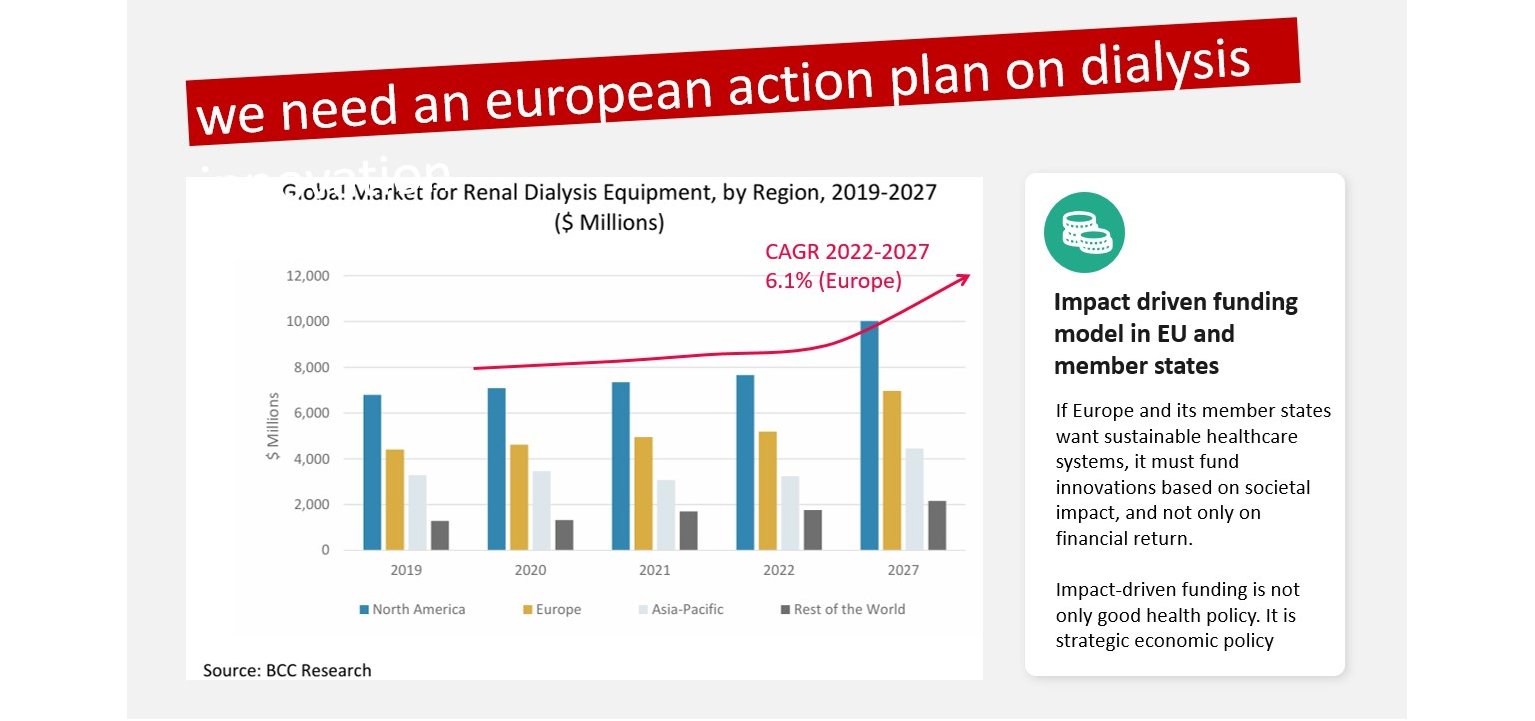
For policymakers, this means that supporting dialysis innovation cannot stop with research funding. Europe needs pathways that connect research, patient needs, regulatory processes, reimbursement, procurement and implementation. The societal value of innovation should also be considered, including patient autonomy, workforce implications and environmental sustainability, not only its immediate financial return.
From national innovation to a European ecosystem
The discussion also made clear that dialysis innovation cannot succeed if it remains confined within national borders.
When Prof. Jadoul asked about the international innovation landscape, Oostrom stressed that the Dutch Kidney Foundation does not want to develop solutions in isolation. If researchers elsewhere are working on similar challenges, the objective should be to connect with them, avoid unnecessary duplication and enlarge the ecosystem around promising solutions.
This collaborative approach is particularly important in Europe, where healthcare systems remain largely organised at national level. As Prof. Jadoul noted during the discussion, this creates a complex landscape in which access to medical technologies, reimbursement and models of care can vary between Member States.
The answer is not necessarily to make every healthcare system identical. It is to ensure that fragmentation does not unnecessarily prevent good ideas from reaching patients.
That requires stronger European collaboration around research priorities, evidence generation, regulatory pathways and implementation. It also requires cooperation beyond Europe, recognising that innovation in kidney care is a global endeavour and that the ultimate objective is not to own an innovation, but to deliver better solutions to patients.
A European opportunity to connect kidney health, innovation and competitiveness
The timing of this debate matters. The webinar placed dialysis within a wider European policy environment in which research, innovation, competitiveness and strategic capacity are increasingly prominent. This creates an opportunity to ensure that kidney health is represented within broader European health and innovation initiatives.
Dialysis is particularly relevant because it sits at the intersection of several European priorities. It is a major healthcare intervention for people with kidney failure. It depends on sophisticated medical technology and resilient supply chains. It has implications for healthcare workforce capacity. It consumes significant resources. And it is an area where technological innovation could directly improve both patient experience and health system sustainability.
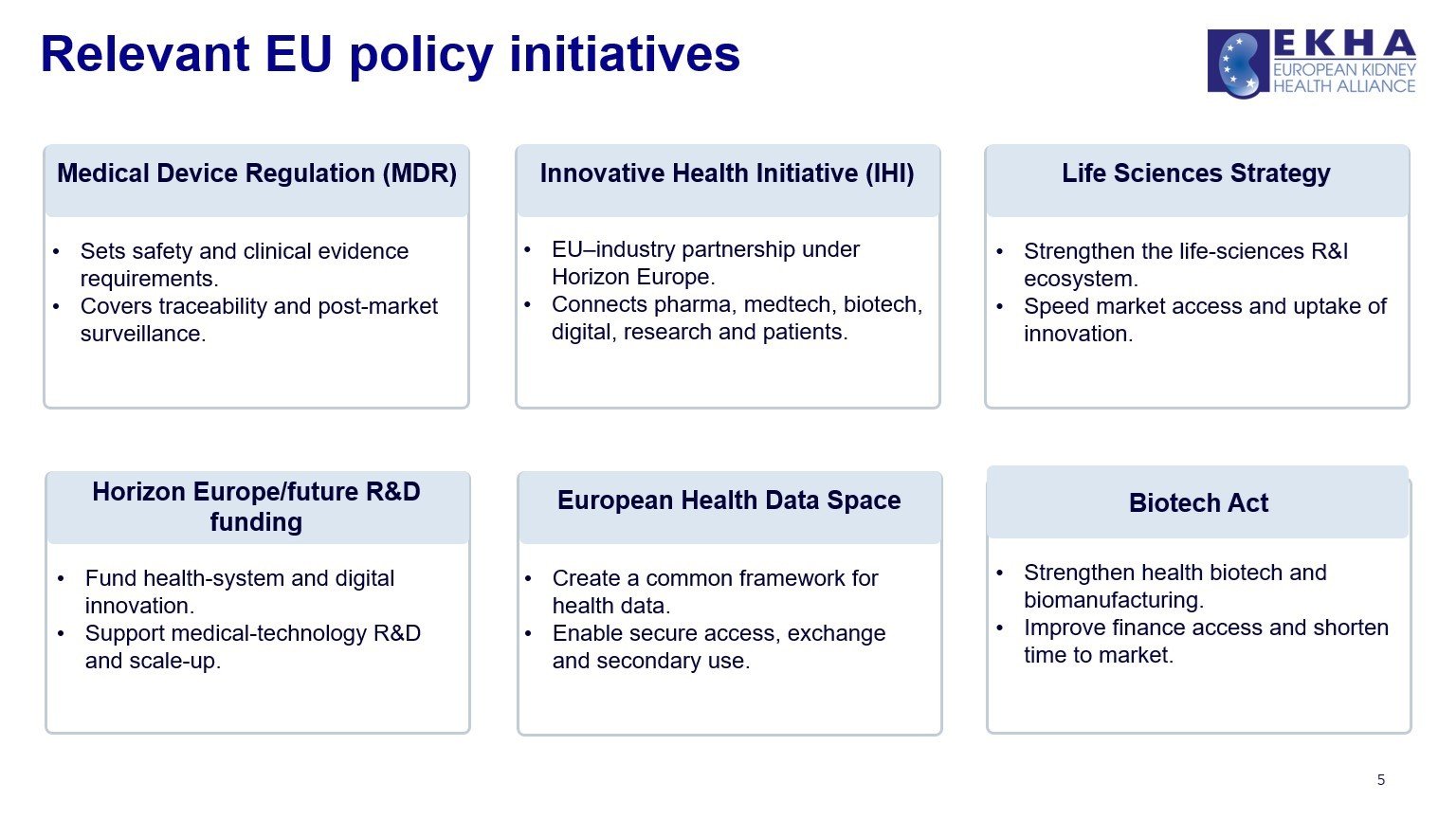
Oostrom called for a more coordinated approach to dialysis innovation, including a joint technology-oriented research agenda centred on patient needs, stronger patient involvement in development and assessment, the use of green care as an innovation incentive, and more efficient pathways for assessing new technologies while maintaining safety as the first priority.
The wider policy message is clear. If Europe wants to strengthen its capacity for health innovation, dialysis provides a field where investment can generate benefits simultaneously for patients, healthcare systems and sustainability.
The kidney community should therefore be part of Europe’s wider conversation about health innovation. Future research programmes and innovation frameworks can help accelerate the development and adoption of more compact, efficient, portable and patient-centred technologies. At the same time, health policy can address the organisational barriers that prevent existing dialysis options from reaching patients equitably.
From treatment availability to genuine patient choice
Perhaps the most important shift is conceptual.
For decades, the central achievement of dialysis has been its ability to replace essential kidney function and sustain life. That achievement remains fundamental. The next stage should build upon it.
Future-proof dialysis means asking how life-saving treatment can also provide greater choice, independence and quality of life. It means recognising that in-centre haemodialysis remains important, while making home haemodialysis more accessible where appropriate. It means recognising peritoneal dialysis as an important home-based modality in its own right, complementary to home haemodialysis rather than competing with it. And it means ensuring that patients understand their options and can make informed decisions together with their healthcare teams.
But the webinar also showed that choice depends on more than clinical guidance. It depends on technology, reimbursement, professional training, healthcare organisation, practical support at home and whether innovation reaches patients in the first place.
Tom Oostrom captured the patient-centred ambition particularly clearly: treatment should adapt to the patient’s life, rather than requiring the patient’s entire life to adapt to treatment. Prof. Bach showed how this ambition can be translated into technological development. Prof. Vanholder demonstrated why different dialysis modalities need to coexist and why home treatment deserves greater attention. Tugrul Irmak showed, from lived experience, what apparently small aspects of equipment and treatment can mean in everyday life.
Throughout the webinar, Prof. Michel Jadoul connected these perspectives, from patient experience and clinical evidence to reimbursement, access and European fragmentation. In closing the discussion, he reflected that much remains to be done to improve dialysis, but that the presentations also provided grounds for hope.
That combination of urgency and possibility is perhaps the strongest message for policymakers.
Europe has an opportunity to bring patient-centred care, healthcare resilience, environmental sustainability and technological innovation together. Dialysis demonstrates how closely connected these agendas can be. It also shows why progress requires a coalition, bringing together patients, clinicians, nurses, researchers, foundations, industry, investors and policymakers.
The future of dialysis should therefore not be defined by a single machine, location or treatment modality. It should be defined by a system capable of offering the right treatment to the right patient, with meaningful choice and appropriate support, while creating the conditions for better technologies and models of care to reach patients.
Dialysis already saves lives. The task now is to ensure that innovation, policy and healthcare organisation work together to make those lives freer, more comfortable and better supported.