Measuring and Reducing the Carbon Footprint of Haemodialysis — A New Web Based Calculator Shows What Is Possible
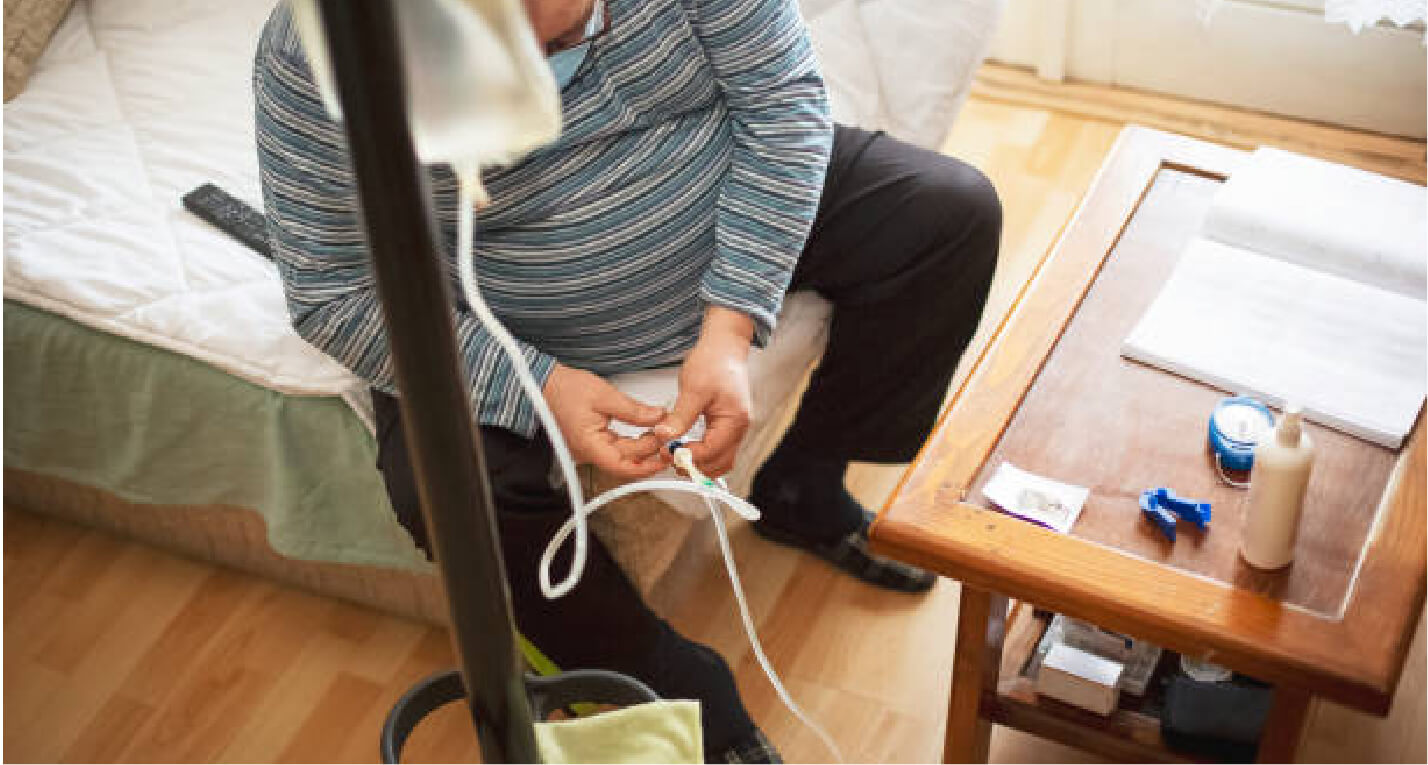
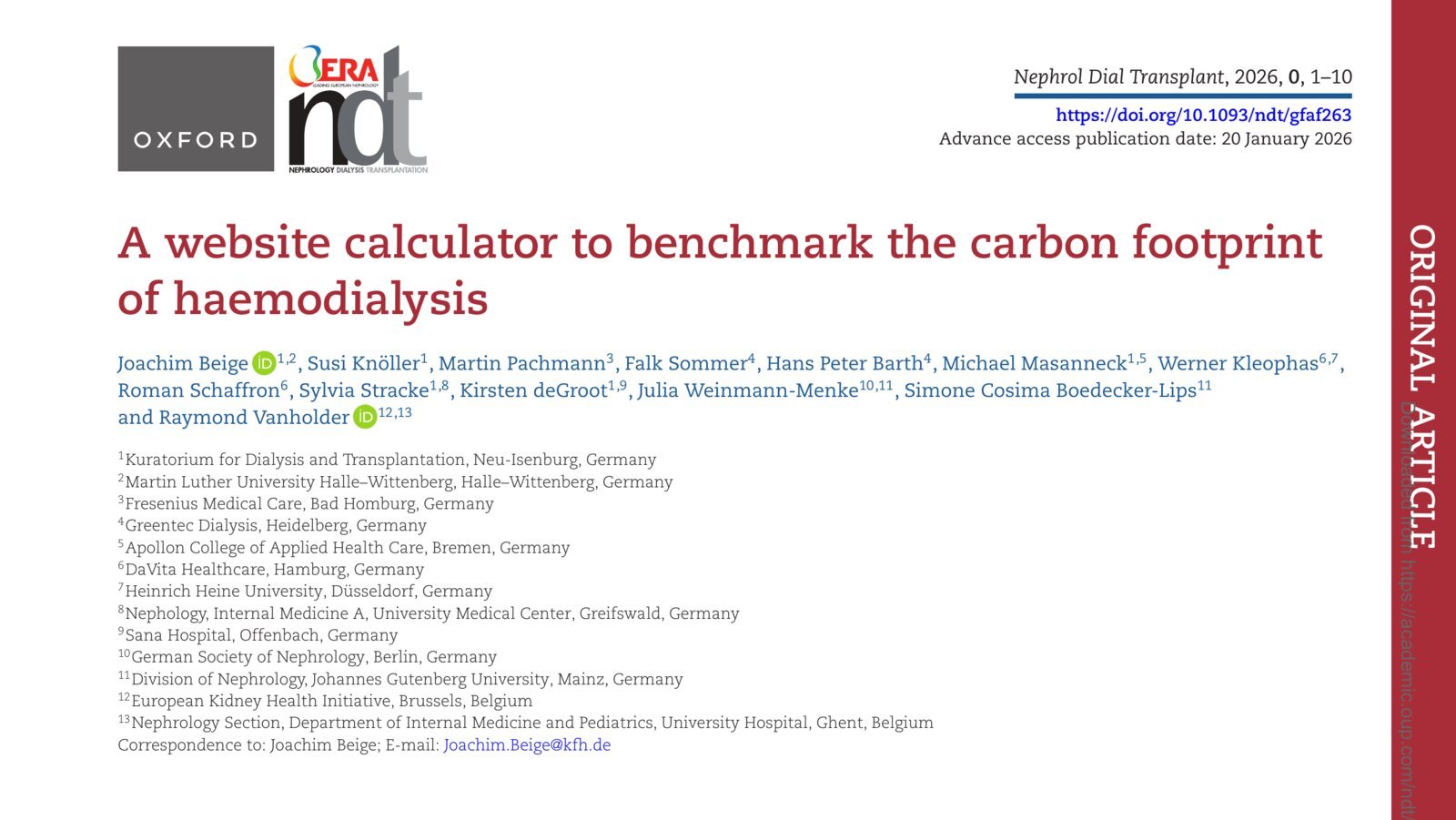
For many patients with kidney failure, haemodialysis is life sustaining. Yet this life saving treatment comes with a significant environmental cost. A new study published in Nephrology Dialysis Transplantation, with the EKHA past president Raymond Vanholder as senior author, presents a practical solution: a web based calculator that allows dialysis centres to measure and benchmark their carbon footprint and identify ways to reduce it.
Why does dialysis have a carbon footprint?
Healthcare contributes an estimated five to ten percent of global greenhouse gas emissions. Dialysis is particularly resource intensive. It requires large amounts of electricity and water, produces considerable waste and involves frequent patient and staff transportation.
In the study by Beige and colleagues, five German haemodialysis centres systematically measured their greenhouse gas emissions between 2015 and 2023. On average, haemodialysis generated 3.72 tons of carbon dioxide equivalents per patient per year. The largest contributors were:
• Manufacturing and disposal of consumables
• Electricity, heating and water use
• Patient transportation
Keeping patients at the centre of the sustainability discussion
Importantly, discussions about the environmental footprint of dialysis must remain sensitive to the reality that dialysis is a life sustaining treatment. Patients rely on it to stay alive and should never be made to feel responsible or guilty for the environmental footprint of a treatment they cannot avoid. The responsibility for reducing emissions lies with healthcare systems, industry and policymakers.
A practical solution: a web based carbon footprint calculator
Recognising the need for standardised measurement, the German Society of Nephrology supported the development of a web based carbon footprint calculator specifically tailored to haemodialysis units. Centres enter data on transportation, energy consumption, water use, waste, consumables and other operational factors. The tool then calculates emissions per patient per year and allows benchmarking across centres and over time.
This is a critical step. Without measurement, meaningful reduction is impossible.
What reductions are achievable today?
During the study period, the participating centres achieved a nine percent reduction in emissions. Importantly, this was done using measures that are already available and feasible in routine practice.
Key interventions included:
- Reducing dialysate flow
Lowering dialysate flow where clinically appropriate reduced water and electricity use without compromising patient safety indicators in the evaluated centre. - Installing solar panels
Switching to on site solar energy significantly reduced emissions related to electricity consumption. - Adopting a more plant based diet
Changing intradialytic meals from conventional meat and cheese based options to more plant based choices reduced nutrition related emissions by more than fifty percent in that category. - Optimising transport
Encouraging group transport and increasing the use of electric vehicles further decreased emissions.
How far can we go?
Even with optimal implementation of all currently available measures, including a greater use of peritoneal dialysis and incremental haemodialysis, the projected maximum reduction was about 38.7 percent, equivalent to 1.5 tons per patient per year. This is substantial, but still not enough to reach the international targets of a fifty percent reduction by 2030 and net zero by 2045.
The authors conclude that further progress will require:
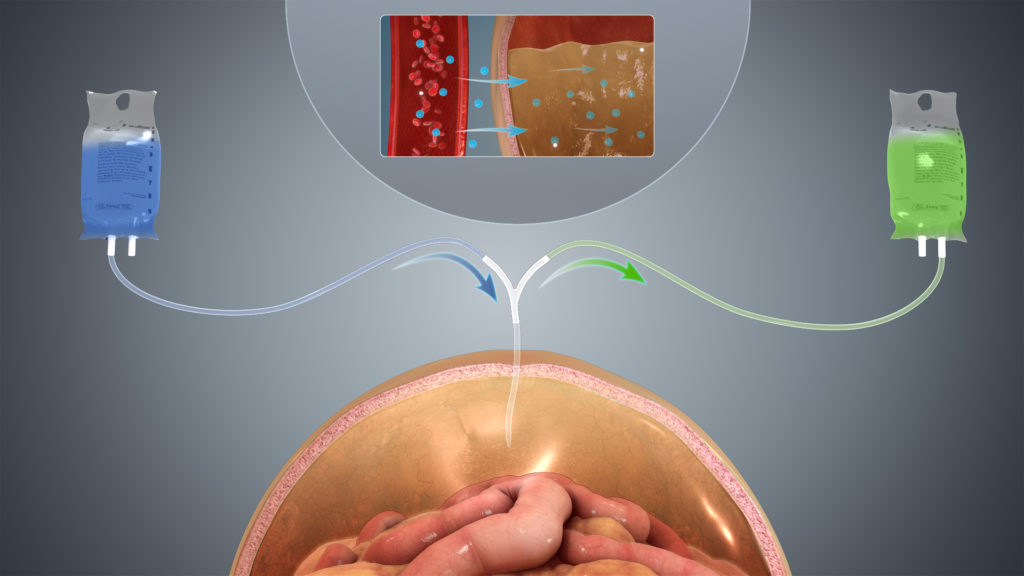
• Broader use of peritoneal dialysis
• Technological innovation such as dialysate regeneration and material recycling
• Stronger prevention of chronic kidney disease
• Increased kidney transplantation
Why this matters for World Kidney Day 2026
World Kidney Day 2026 is an opportunity to highlight not only kidney health, but also the sustainability of kidney care. Patients with kidney disease are among those most vulnerable to the health impacts of climate change, including heatwaves and extreme weather events. Reducing the environmental footprint of dialysis is therefore a double responsibility: protecting planetary health and protecting patients.
This study demonstrates that measurable progress is possible today. By using standardised tools, benchmarking performance and implementing practical changes, dialysis centres can take meaningful steps toward climate responsible kidney care. Sustainable nephrology is no longer an abstract concept. It is a measurable and actionable goal.