Why early kidney disease investment could save billions and improve global health
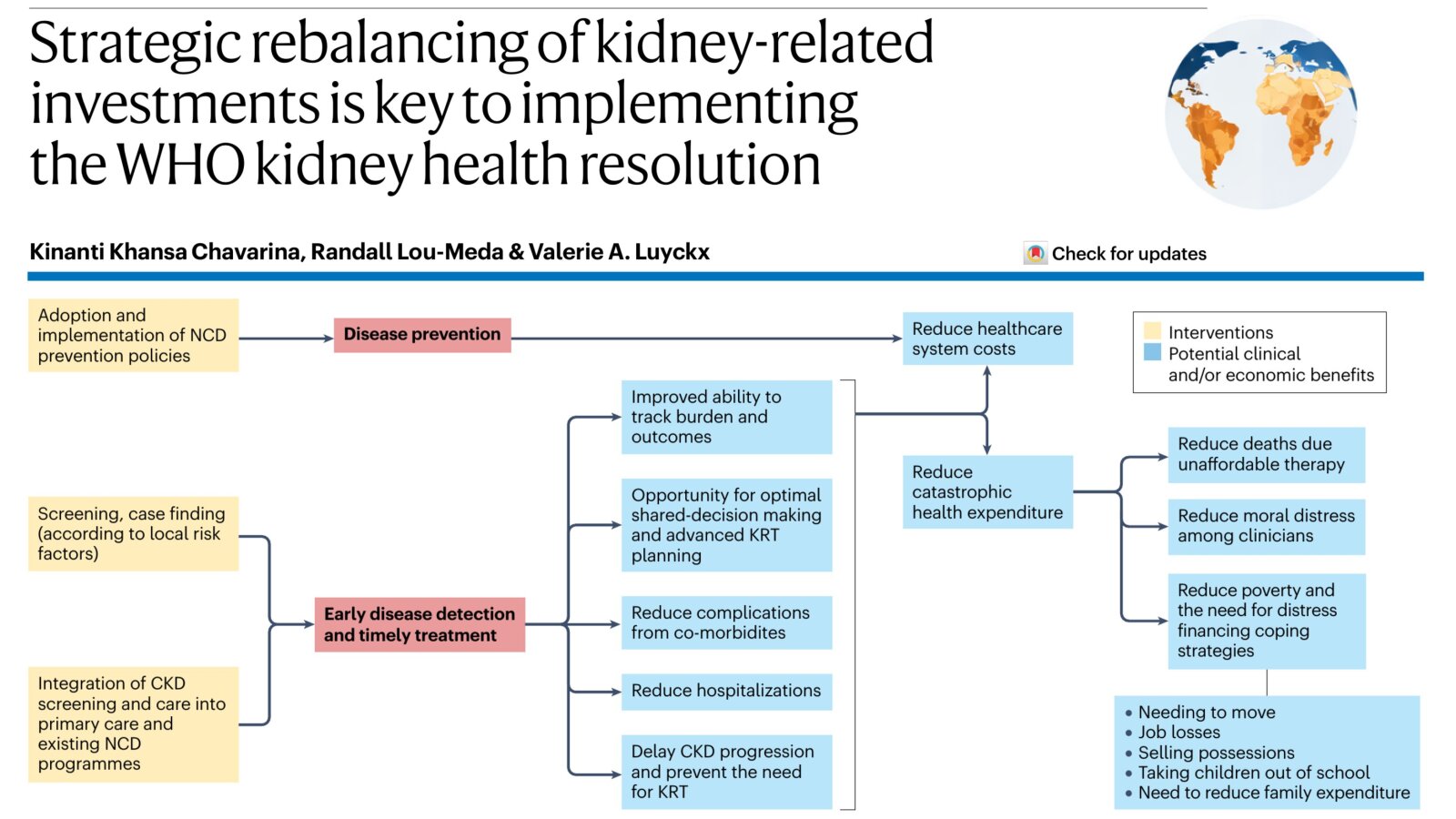
The adoption of the World Health Organization resolution on kidney health marks a major step forward in addressing chronic kidney disease, which affects more than 674 million people worldwide. However, implementing this resolution will require more than funding alone. It will require smarter investment decisions that prioritize prevention and early care.
In the recent commentary published in the Nature Reviews Nephrology, the EKHA Co-President Valerie Luyckx and coauthors argue that strategic rebalancing of investments toward prevention and early management can improve outcomes, reduce healthcare costs, and strengthen long term sustainability. As countries move to implement the WHO kidney health resolution, early investment in kidney health represents both a public health opportunity and an economic imperative.
Currently, many health systems spend a large proportion of kidney related budgets on late stage treatments such as dialysis. These treatments are lifesaving but extremely expensive. Annual dialysis costs range from approximately 1600 dollars to 66000 dollars per person. Global kidney replacement therapy costs are expected to rise from 372 billion dollars in 2022 to 407 billion dollars by 2027.
Late stage kidney disease also drives additional healthcare costs. Patients experience higher rates of cardiovascular complications, frequent hospitalizations, and reduced productivity. For example, stage five chronic kidney disease is associated with a twelve fold increase in cardiovascular risk compared with early stage disease.
In contrast, early detection and treatment can significantly reduce both clinical and economic burden. Evidence from several countries demonstrates this potential:
In Europe: population wide screening for albuminuria could reduce lifetime dialysis or transplantation by 21.8 percent and reduce cardiovascular disease by 12 percent
In Thailand: integrated care programs could reduce national health expenditure by 7 percent over five years
In Chile: early treatment could reduce future costs by nearly 295 million dollars
In Australia: targeted early detection could generate savings of 6.7 billion dollars over twenty years
Integrating kidney care into primary care systems and existing non communicable disease programs such as diabetes and hypertension management can further improve access and equity. These strategies also benefit underserved populations including Indigenous communities, agricultural workers, pregnant women, and people with multiple chronic conditions.