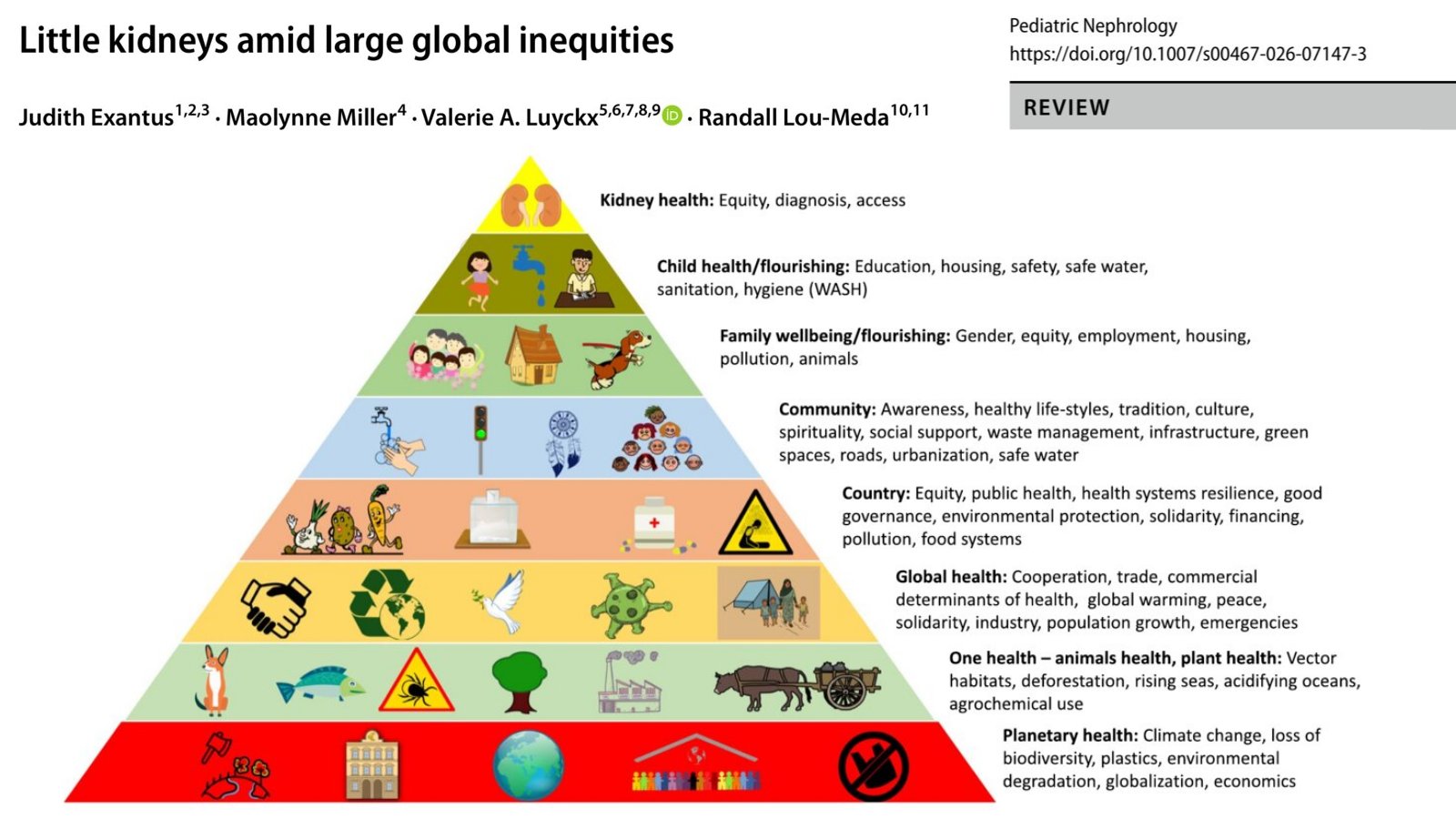
Little kidneys amid large global inequities: Why child kidney health matters worldwide
Chronic kidney disease in children is a growing global health challenge that remains largely overlooked. A review in Pediatric Nephrology and the commentary in the Lancet Child and Adolescent Health journal with a great contribution by the EKHA Co-President Valerie Luyckx highlights how millions of children worldwide face unequal access to diagnosis, treatment, and long term care for kidney disease.
The research reveals that kidney dysfunction is now the leading metabolic risk factor for death in children. Despite this, awareness remains low and many children are diagnosed only when their condition has already progressed.
📜 Download full Pediatric Nephrology article
📜 Download full the Lancet Child and Adolescent Health article
Kidney health starts before birth
The authors emphasize that kidney health begins early. Factors such as maternal health, nutrition, infections, and poverty all influence a child’s kidney development. Children born prematurely or with low birth weight are particularly vulnerable to developing chronic kidney disease later in life.
In many lower resource settings, children often present with advanced disease. This is partly due to limited access to screening, diagnostic tests, and specialist care. Even basic tools such as urine testing or blood pressure monitoring may not be available in some regions.
Inequities in treatment and care
Access to treatment varies widely across the globe. In some countries, families must pay out of pocket for dialysis or transplantation. These costs can be catastrophic, forcing families to choose between financial ruin and life saving care.
The review also highlights shortages of pediatric kidney specialists and limited access to surgery and kidney replacement therapy. These challenges disproportionately affect children in low and middle income countries.
The broader impact on children and families
Kidney disease affects more than physical health. Children with chronic kidney disease often experience delayed growth, disrupted education, and emotional challenges. Families may face financial hardship, job loss, and increased caregiving demands.
These impacts reinforce cycles of poverty and health inequities, making early detection and comprehensive care essential.
Solutions and success stories
The authors highlight promising initiatives in Guatemala, Jamaica, and Haiti. Local programs supported by healthcare professionals, charities, and international organizations have improved access to dialysis, education, and care.
These examples demonstrate that progress is possible even in challenging environments.
A global call to action
The article calls for stronger health systems, improved screening, and policies addressing social determinants of health. Aligning with Sustainable Development Goals and adopting a One Health approach could help reduce inequities and improve outcomes.
Improving child kidney health is not only a medical priority. It is a matter of global equity and child wellbeing.